

Build first, lead forever
Why AI infrastructure is America’s next advantage
The U.S. is leading the AI supercycle, but holding onto a leadership position is often the most difficult part of the job.
American companies are driving a huge share of AI breakthroughs and investment momentum. The risk is not ambition. It is ensuring infrastructure does not stand in the way of ambition.
Networks were built for yesterday’s traffic patterns and service expectations. AI changes that. It demands lower latency, higher reliability, heavier uplink, and far more east–west data movement between data centres and edge locations. Add new security threats, tighter power constraints, and fragmented policy, and momentum can stall right at the point adoption should take off.
The Build First, Lead Forever report explores how to accelerate investment in the infrastructure AI depends on, including 5G Standalone, data centre interconnect, distributed compute, cyber resilience, energy readiness and a policy framework that clears the runway.
Because without advanced connectivity, there is no AI supercycle in the U.S.
Get the latest insights, download the Build first, lead forever report

What is the AI supercycle?
Artificial intelligence is entering a transformative multi-decade phase known as the AI supercycle, where it will become integral to all industries and technologies, driving exponential innovation and economic growth through pervasive automation and data optimization.
In a word, no.
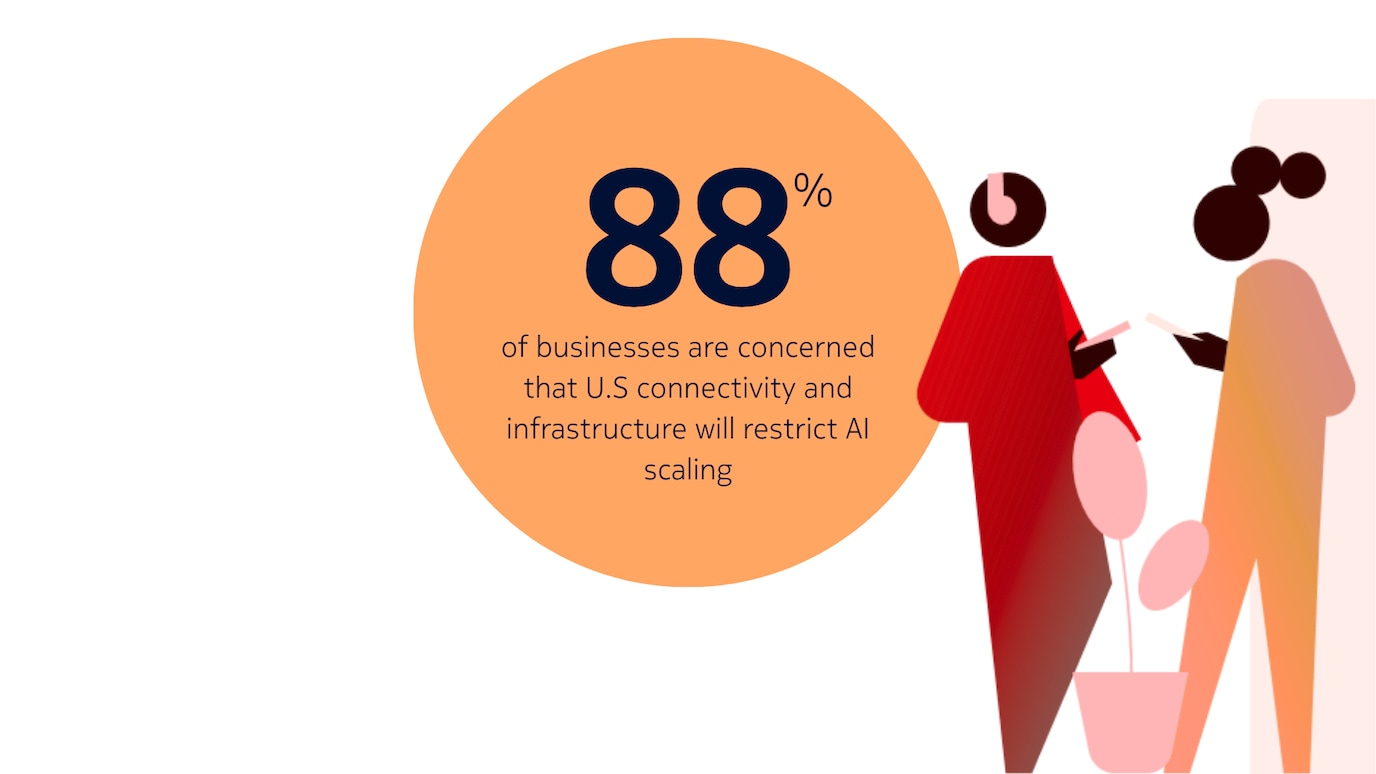
The U.S. has the ingredients for AI at scale, but the infrastructure underneath isn’t fully there yet. According to our research, 88% of technologists and decision makers are concerned about the ability of infrastructure to scale in line with AI requirements.
Grid capacity is tight, connectivity is uneven, and data-centre buildouts face delays. The foundations are progressing, just not at the pace AI demand now requires.
U.S. companies are thriving in the early days of the AI era, but at some point, the upper limits of what is possible will be hit unless network transformation is accelerated.
This characterises the challenge in the U.S. perfectly: can infrastructure keep up with the ambition of U.S. business?
Fuelling the next phase of the AI supercycle
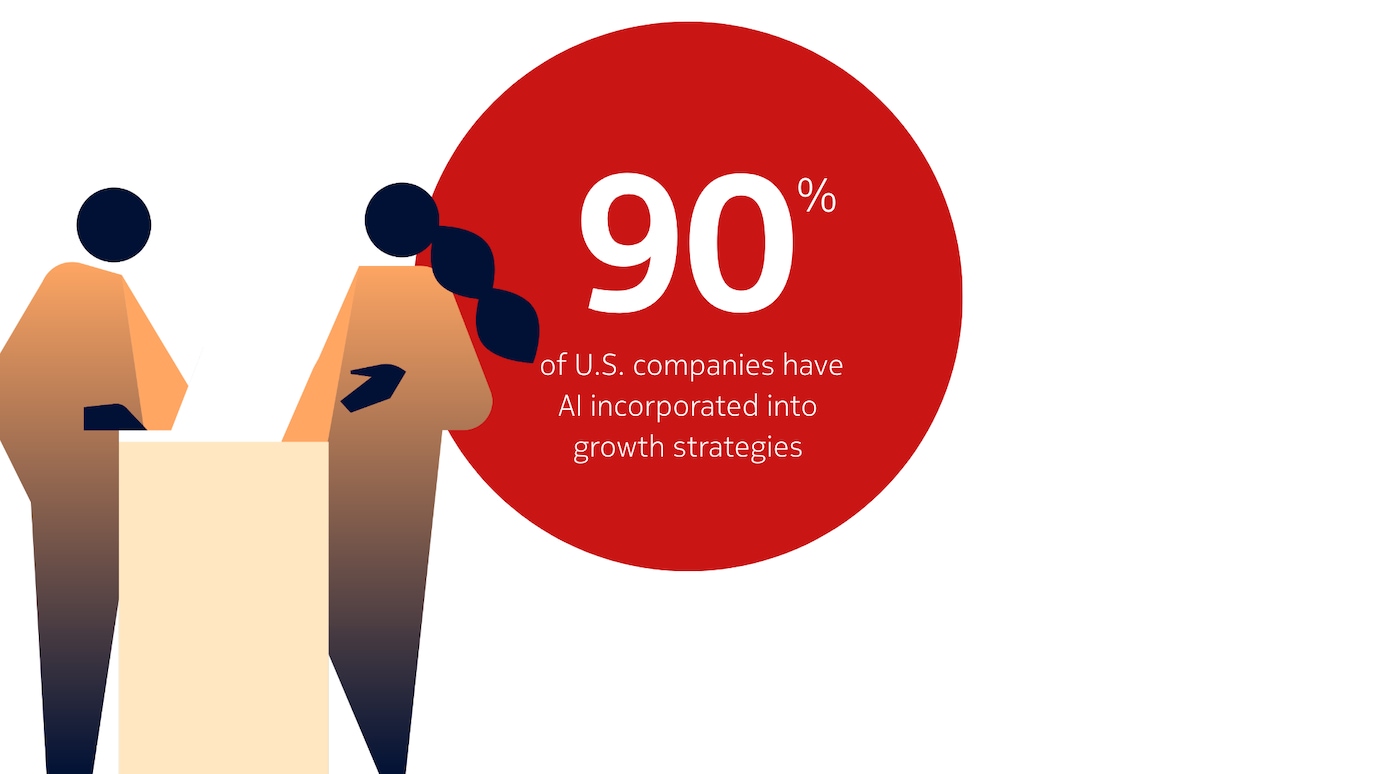
The U.S. holds the current leadership position in the AI era, and for good reason: it mobilized in more effectively than anyone around the world
Academically, commercially and politically, the U.S. has not only normalized the concept of AI in record time but pushed the limits of innovation. It is home to some of the most recognizable names in the AI segment, and they are not slowing down.
But this is where the challenge lies.
Innovators want to accelerate, but infrastructure threatens to stall progress.
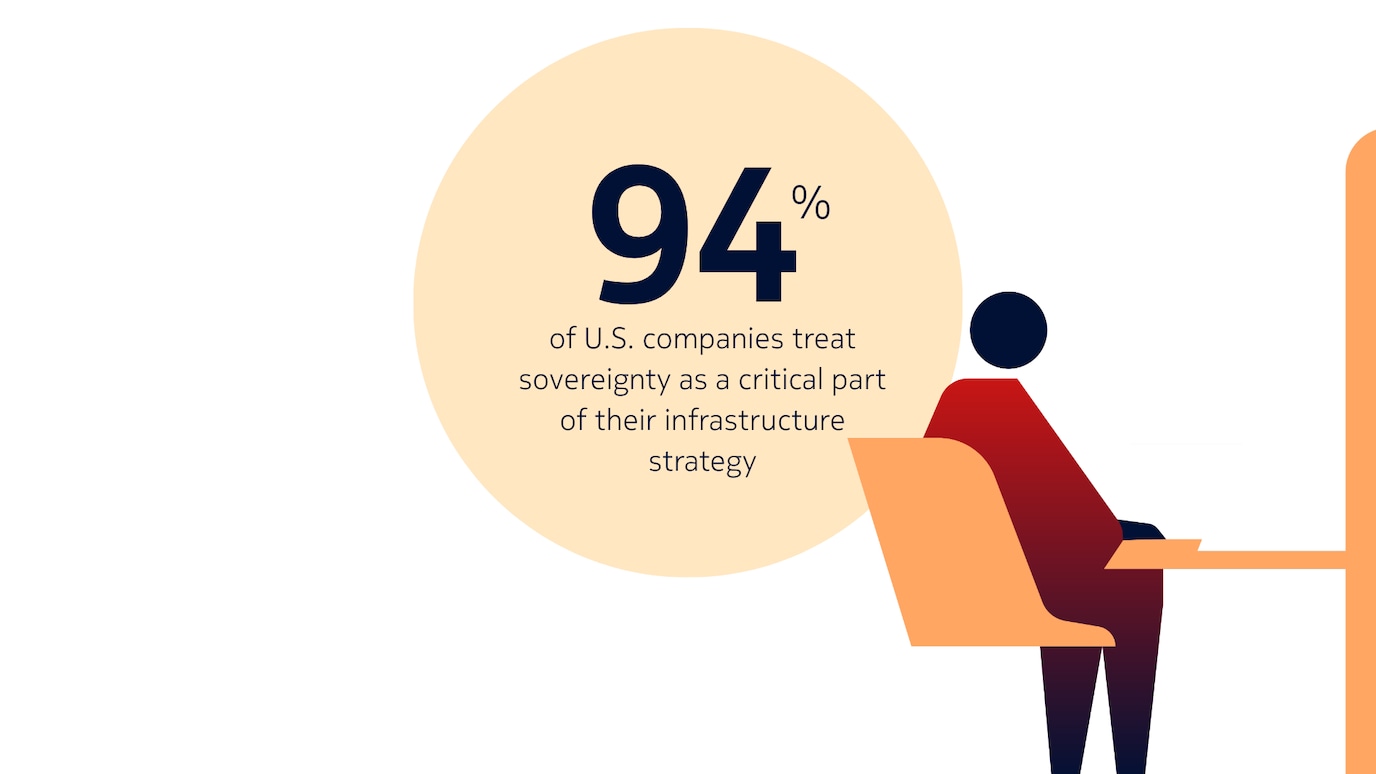
Building the future on trusted networks
The AI Supercycle depends on trusted networks.
Without trusted, secure, high-performance networks, data flows break down and adoption stalls.
Building that trust means proving networks can handle the scale, sensitivity, and speed AI demands, while protecting privacy and ensuring resilience against disruption.
It is the difference between AI being a novelty and becoming a true driver of economic growth.
Advancing connectivity in the AI era




Get the latest insights

Blog

Blog

Video
Towards Autonomous RAN with MantaRay SMO

Video
Nokia and HPE collaboration for expanding Cloud AI-RAN

Video
Nokia and Red Hat are shaping the future of Cloud AI-RAN

Blog

Blog
Video