

AI-RAN
The industry’s first AI-native RAN platform

Summer launch 2026
Nokia defines the next era of radio with the industry's first AI-native RAN platform
Available for 5G and 5G‑Advanced, with a software upgrade path to 6G and full O‑RAN compliance.
Delivers more capacity from existing assets, stronger economics and continuous innovation through software.

Twice the network capacity from the spectrum you already own
Extract more capacity from your spectrum assets, with the potential to exceed 2x spectral efficiency. Increase busy-hour and uplink performance while reducing cost per bit.

RAN that evolves at software speed
Move beyond hardware upgrade cycles with a software-defined RAN that continuously improves through AI. New features, performance gains and optimizations arrive through software, enabling your network to evolve in line with demand.
Open and programmable, ready for the AI era
The RAN operates as a programmable, AI-native platform with open interfaces, APIs and support for AI applications. It accelerates innovation and enables new services beyond connectivity.

Three deployment paths, one AI-RAN platform
Add AI-accelerated capacity to existing baseband deployments, introduce accelerated AI‑RAN nodes or deploy cloud‑native AI‑RAN on COTS infrastructure. All paths run on a common anyRAN software foundation with a shared roadmap to 6G.

A leap in economics and power efficiency
Deliver more capacity within a comparable power and hardware envelope. This reduces cost per bit and improves network economics while extracting greater value from existing infrastructure.
AI is forcing a platform shift
AI is becoming the dominant workload in mobile networks, fundamentally changing traffic profiles and connectivity demands.
Generative, agentic and physical AI introduce higher uplink demand, lower latency and more processing at the edge.
The RAN transforms from a hardware-defined system to a software-driven platform that improves continuously.

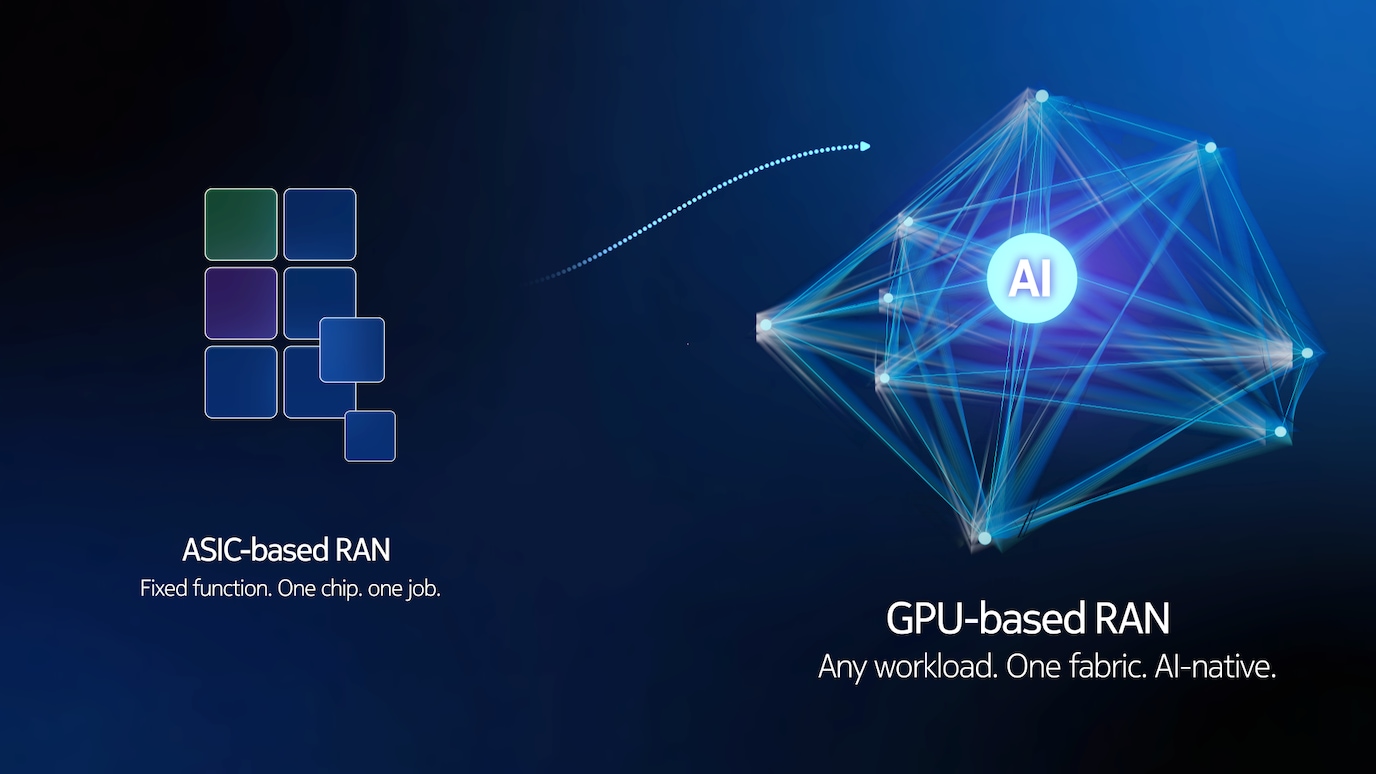
The RAN becomes programmable
Nokia AI‑RAN turns the radio network into a programmable, AI-native platform, where RAN functions and AI workloads run on a shared computing foundation.
AI‑accelerated computing brings advanced models into the radio layer, operating at radio timescales.
Capacity, efficiency and performance improve through software without relying on hardware refresh cycles.
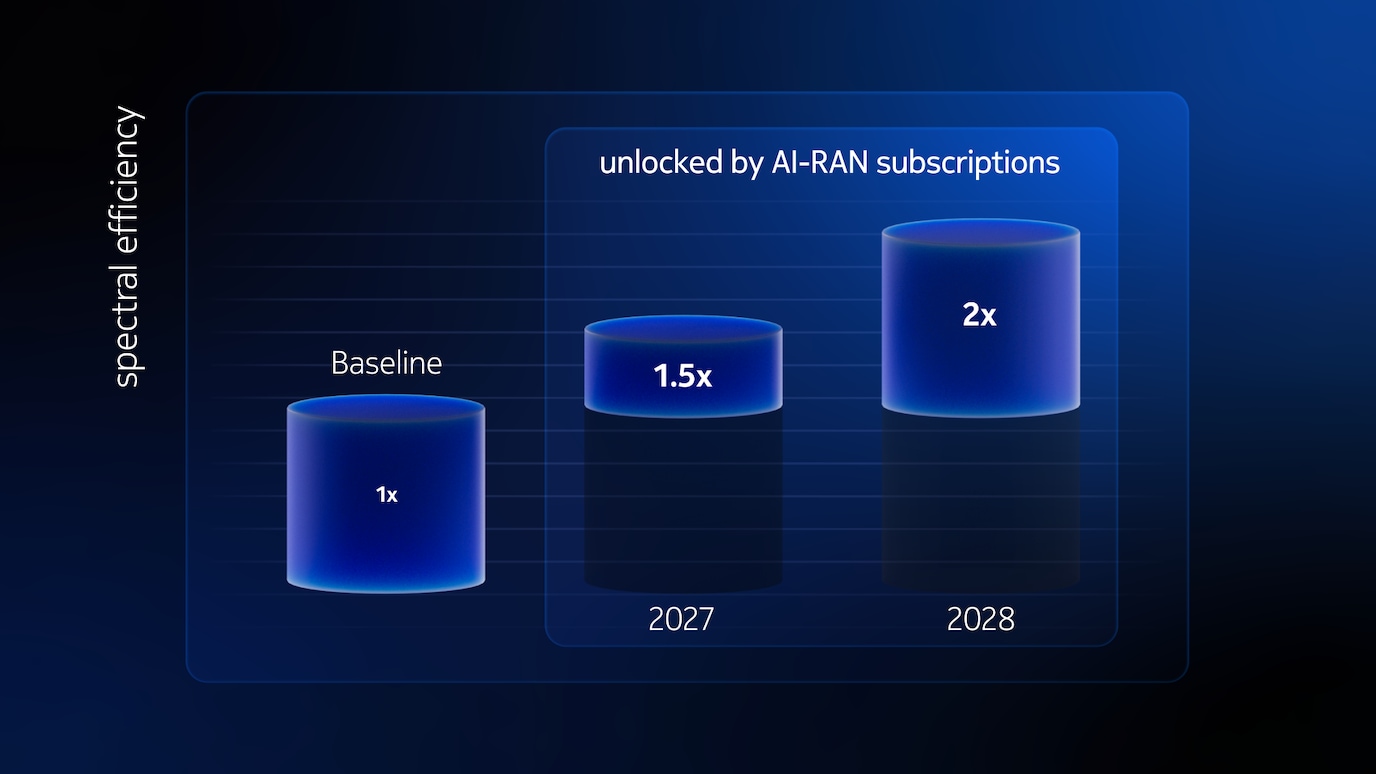
A leap in spectral efficiency
Nokia AI‑RAN combines advanced AI algorithms with AI‑accelerated computing to push spectral efficiency beyond conventional RAN architectures.
We have already demonstrated more than 20% efficiency gains through AI-driven radio innovations. Advanced AI models running at radio timescales extend these gains toward more than 2x spectral efficiency.
Higher spectral efficiency means extracting more capacity from your spectrum assets, creating headroom for AI-driven demand and a better return on every hertz.
One platform across every deployment
Nokia AI‑RAN runs on a single AI-native software stack with a common software roadmap across three hardware deployment paths with the same 6G destination. Choose the route that fits your network today and evolve based on your deployment strategy.
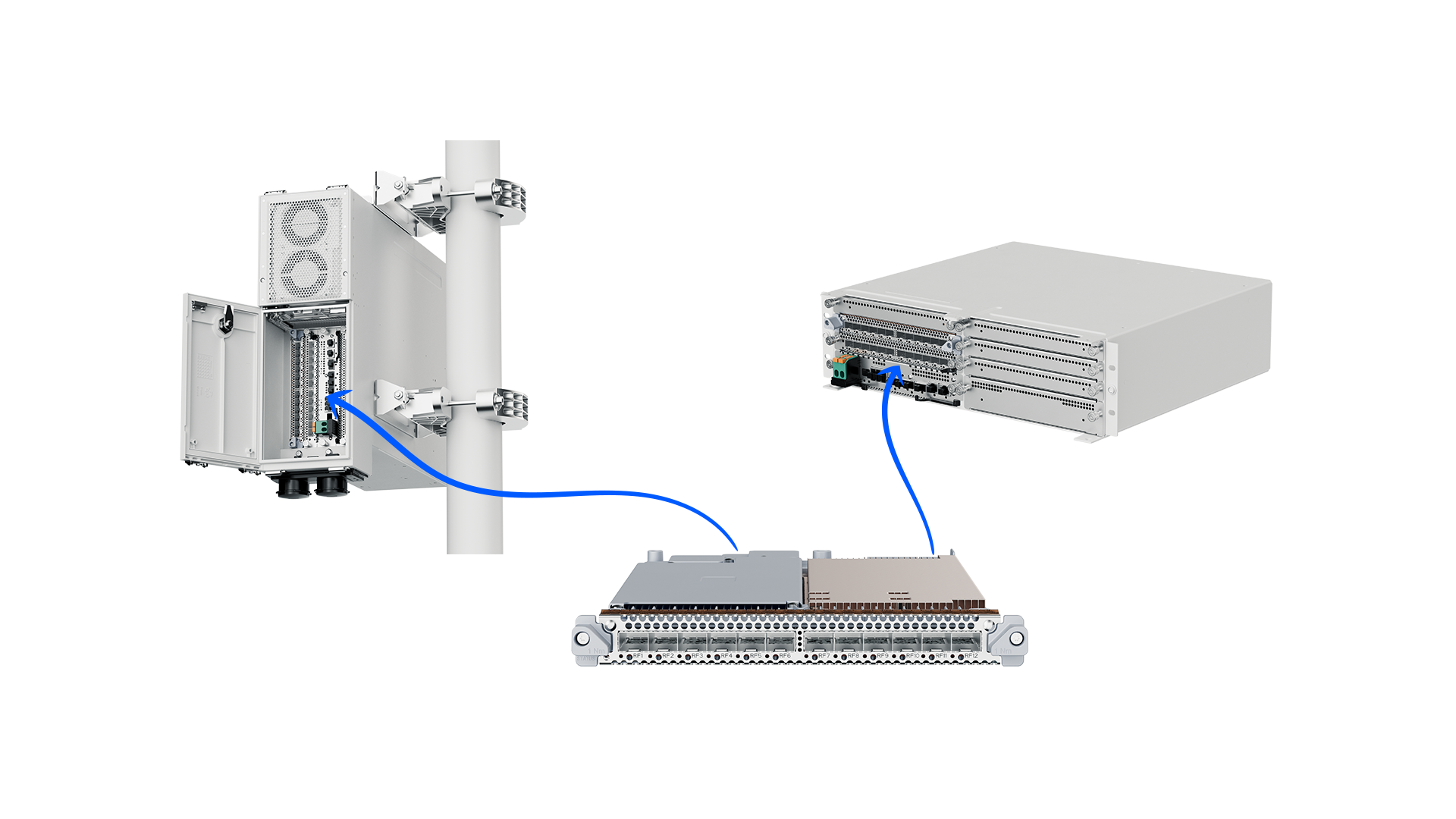
Build on your installed base
A single-slot AirScale plug-in card adds AI‑accelerated capacity to existing baseband deployments. AI capabilities are introduced without changing the site footprint or replacing hardware. Learn more about AirScale baseband solutions.
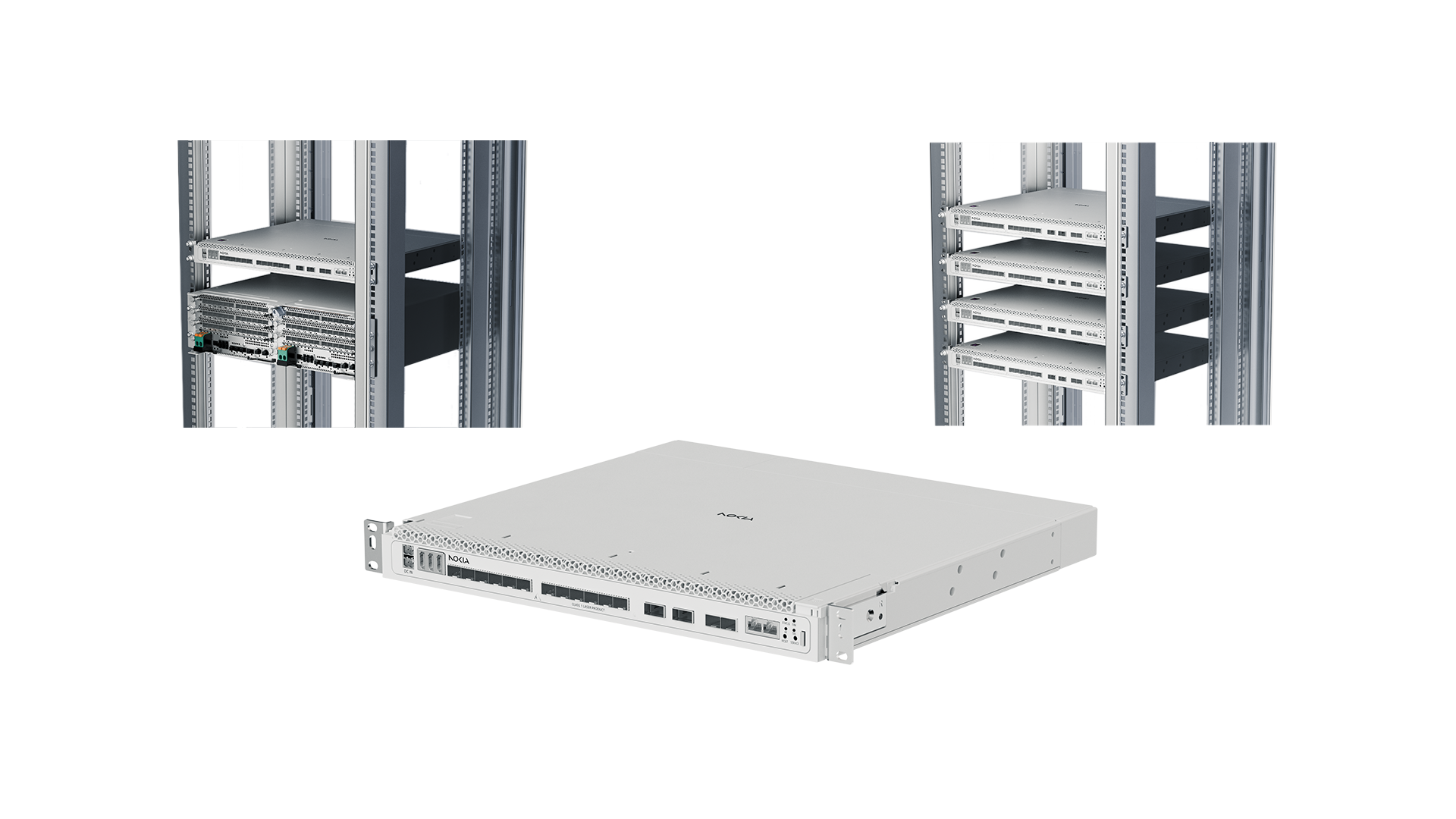
Add a high-capacity AI-RAN path
Accelerated AI‑RAN node provides dedicated capacity and deployment flexibility, including standalone deployments. It works alongside existing networks and supports evolution from 4G and 5G to 6G.
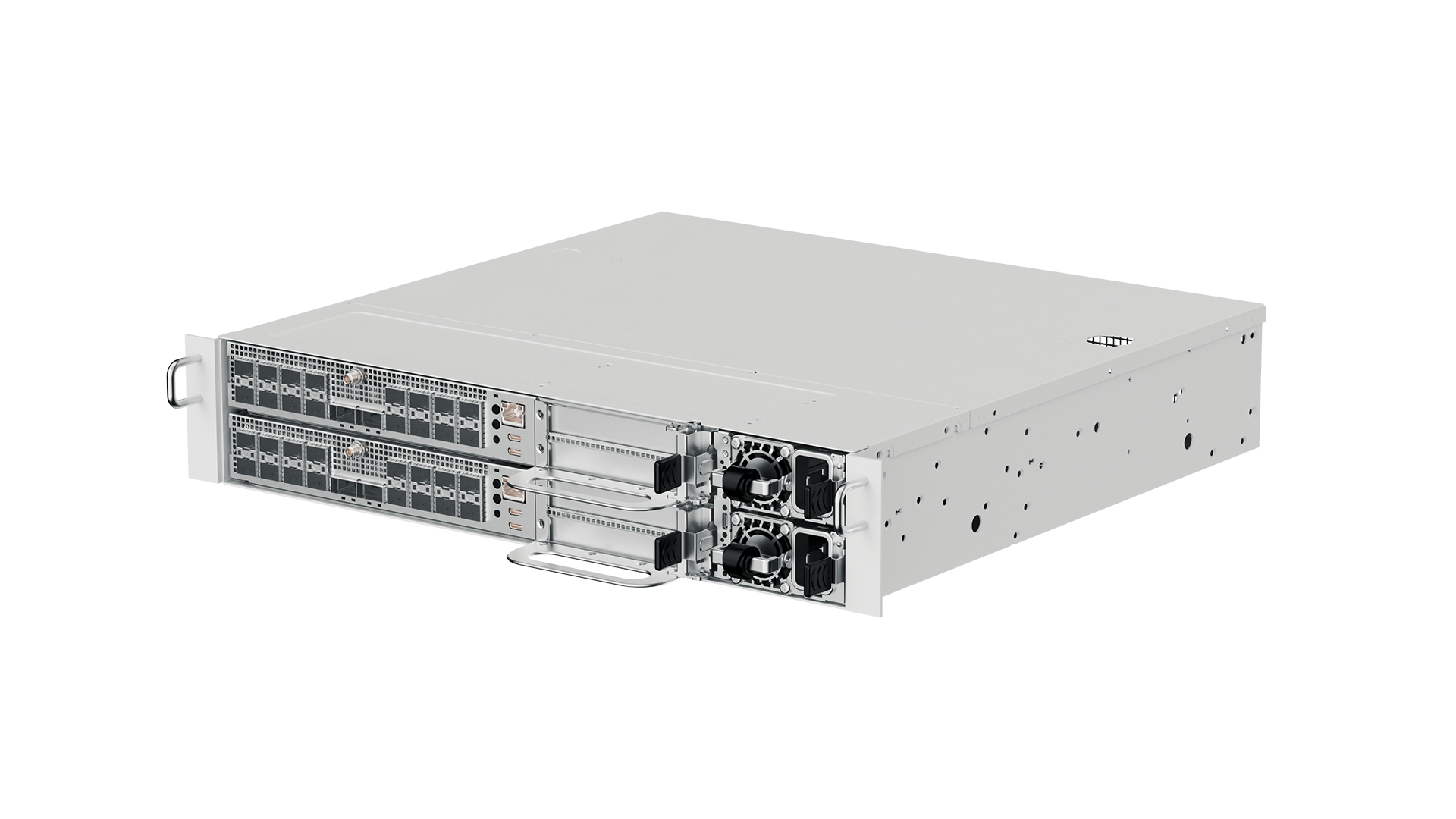
Move to cloud-native AI-RAN
AI‑RAN on commercial off-the-shelf (COTS) servers supports cloud‑native deployments across centralized and distributed environments. Open server infrastructure allows flexible sourcing and operations.
Accelerated computing for AI-RAN
We bring AI-accelerated merchant silicon into the RAN in collaboration with NVIDIA. By combining our anyRAN software stack with accelerated computing, we run advanced AI models in live networks at radio timescales, improving how the RAN utilizes spectrum to increase capacity.
This extends what the RAN can deliver and marks the shift to a software-defined system that continues to improve as AI models and software evolve.
Reimagine RAN as the programmable foundation of the edge AI economy
Explore key insights from Chetan Sharma Consulting on AI-RAN, a software-defined platform that marks the next architectural shift in mobile networks.
This whitepaper explains how AI-RAN converges connectivity and AI-accelerated computing to unlock efficiency gains, accelerate innovation and enable new revenue streams from existing infrastructure. Early movers are best positioned to capture value and build operational advantage on the path to AI-native 6G.

Whitepaper by Chetan Sharma Consulting
AI-RAN: Software-Defined Programmable Platform
AI-RAN customer case studies and use cases
Orange's approach to building networks of the future - AI RAN
T-Mobile and Nokia: Driving Next-Gen Network Innovation
AI-RAN partnership
How IOH Achieved Southeast Asia’s First AI-Powered 5G Call
Nokia and NVIDIA collaboration accelerates AI-RAN deployment across global operators
Nokia & du: Delivering lasting impact with AI for RAN
How Deutsche Telekom is Transforming its Core Network with a Horizontal TelCo Cloud

AI-Native Networks: From Bits to “Kinetic Tokens” | MWC Panel with T-Mobile, NVIDIA & Nokia
Frequently asked questions
Nokia AI-RAN is the industry’s first AI-native RAN platform. It is built on accelerated computing and the anyRAN software foundation, providing a software-defined, programmable platform across three deployment paths with a shared software roadmap to 6G.
The difference between RAN and AI-RAN is architectural. Traditional RAN architectures were built for mobile broadband connectivity and largely human-driven traffic such as voice, video and data. AI-RAN combines a software-defined platform with accelerated computing integrated into the RAN.
This enables advanced AI-driven radio optimization to improve spectral efficiency, capacity and cost per bit. AI-RAN supports today’s AI traffic and emerging AI workloads that require ultra-low latency, tightly controlled jitter and, in some cases, deterministic connectivity.
A software-defined RAN decouples software updates from hardware upgrade cycles. AI-RAN is software-defined and programmable. It allows the network to improve continuously through software and supports the evolution to AI-native 6G.
Accelerated AI-RAN node is a high-capacity solution suitable for any radio access network, including standalone deployments. It combines advanced algorithms and AI-accelerated computing, supporting evolution from 4G and 5G to 6G. Nokia has developed the Accelerated AI-RAN node in collaboration with industry partners like NVIDIA.
Cloud AI-RAN is an AI-accelerated RAN built on GPU-powered COTS servers. It is suitable for both distributed and centralized deployments. Cloud-native AI-RAN enables AI Grid rollouts and sharing of accelerated computing infrastructure across AI workloads and RAN. Nokia has developed the cloud-native AI-RAN in collaboration with an ecosystem of industry partners.
AI inference must become increasingly distributed to the RAN edge to meet the growing demand for AI inference. While AI model training remains largely centralized in data centers, the capacity demands for AI inference workloads will increasingly land at the network edge, or in the distributed AI-RAN nodes.
Telecommunication providers can monetize AI-RAN by transforming their existing, widely distributed RAN infrastructure into an AI grid that supports AI inference at the edge. As physical AI systems scale, telecommunication providers can create new revenue opportunities by delivering deterministic connectivity and edge AI capabilities.
Typical AI workloads are generative AI, agentic AI and physical AI.
- Generative AI (GenAI) places heavy demand on uplink and requires robust interconnect performance.
- Agentic AI generates bursty, transactional traffic and requires highly responsive communications.
- Physical AI requires ultra-low latency, controlled jitter and deterministic connectivity to support real-time interaction with the physical world.
The AI-RAN Alliance is a global consortium that aims to transform networks through AI innovation and collaboration. It advances the integration of AI into radio access networks and fosters the development of AI-native infrastructures, focusing on network performance, energy efficiency and monetization opportunities for telecommunication providers. Nokia is a founding member of the AI-RAN Alliance.
Learn more about AI-RAN

Report

Blog

Article
Video
Nokia’s head of Europe talks AI-RAN advances

Video
Rethinking the RAN as AI, cloud and openness converge
Video
AI-RAN and Nokia External Compute Engine: Monetizing compute at the network edge
Video
Nokia, Elisa and NVIDIA Accelerating AI-RAN from concept to commercialization

Blog
Want to get the latest news?
Please complete the form below.
The form is loading, please wait...
Thank you. We have received your inquiry. Please continue browsing.