

Renewable energy
Connect wind and solar operations for safer, smarter and more sustainable energy production

Power the renewable energy transition with Nokia advanced connectivity
Renewable energy is expanding rapidly as organizations and governments work toward more sustainable, resilient energy systems. Wind and solar farms increasingly operate on a large scale and in remote or offshore locations, creating new challenges for construction, operations and maintenance. Reliable communications can connect workers, assets and operational systems across these environments, improving visibility, collaboration and safety. By combining connectivity with digitalization and automation, renewable energy operators can increase productivity, optimize asset performance and support the efficient delivery of clean energy.
Improve operational efficiency
Connect workers, assets and systems to streamline construction, maintenance and daily operations.
Enhance workforce safety
Improve communications and situational awareness across remote, offshore and geographically dispersed sites.
Accelerate AI-enabled digitalization
Enable automation, predictive maintenance, IoT and other digital applications across renewable energy operations in the AI era
Discover our renewable energy operations solutions
Mission-critical WAN for power utilities
Build a converged network for IEC 61850 and other critical applications.

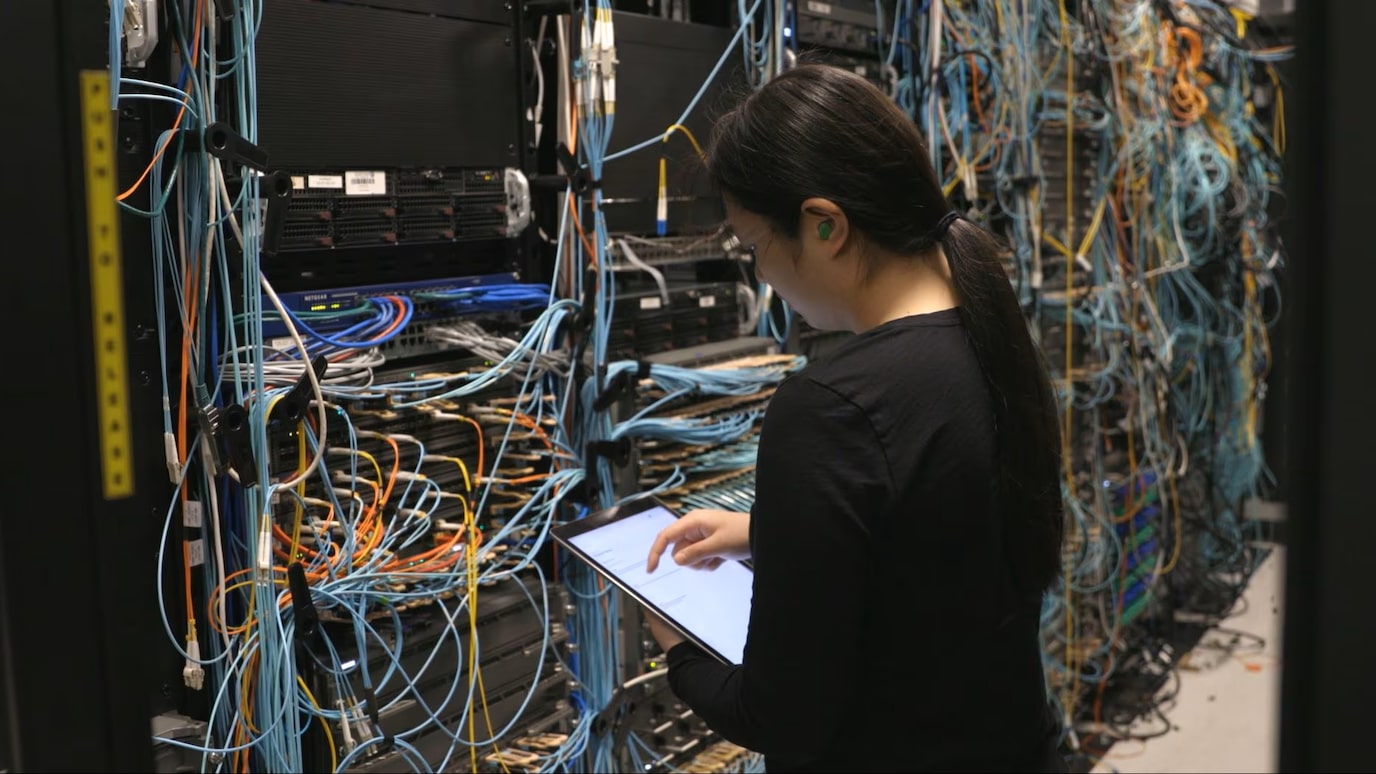
Quantum-safe optical networking
Protect data from intrusion and theft through quantum-safe encryption, key management and intrusion detection.
Private 5G networks
Dedicated networks that connect your AI-driven operations reliably, securely and resiliently.

Explore our renewable energy infrastructure capabilities

Article
Advancing wind farm communications
Learn how private wireless can enhance wind farm safety, connectivity and productivity.
Why choose Nokia for renewable energy?
Nokia helps renewable energy operators connect remote and challenging sites with private wireless and mission-critical networking. Our private LTE and 5G solutions provide secure, reliable connectivity for workers, sensors, cameras, turbines and operations centers across wind and solar installations. Nokia enables operators to digitalize construction, operations and maintenance, deploy Industry 4.0 applications and improve situational awareness while creating a scalable communications foundation for future requirements.
Connect remote and offshore operations
Extend reliable communications across wind and solar sites where commercial mobile or fixed connectivity may be unavailable.
Accelerate Industry 4.0 adoption
Enable IoT, predictive maintenance, drones and AR/VR applications with high-bandwidth, low-latency private wireless connectivity.
Improve workforce safety and productivity
Connect workers with real-time communications, remote assistance and operational information across distributed sites.
Optimize renewable energy operations.
Connect assets, sensors and operations centers to improve monitoring, maintenance and operational awareness.
Customer success stories

Customer success

Customer success

Customer success
Case study

Video
Frequently asked questions
Wind and solar installations are frequently located in remote, offshore or geographically dispersed environments where commercial mobile coverage and fixed communications may be limited. At the same time, operators need to connect workers, sensors, cameras, turbines and operations centers throughout construction, operation and maintenance. Reliable connectivity allows information to flow across these sites, supporting better collaboration, operational visibility and communications. As renewable energy facilities adopt more digital technologies, connectivity also provides the foundation for automation, IoT, predictive maintenance and other Industry 4.0 applications that can improve productivity and asset performance.
Digitalization enables renewable energy operators to connect people, assets and operational systems so they can share information more effectively. During construction, digital tools can improve collaboration and the flow of operational data. Once facilities become operational, connected sensors and applications can support monitoring, predictive maintenance and greater automation. These capabilities can help operators simplify maintenance, improve situational awareness and make better use of generating assets. High-performance connectivity is particularly important as wind and solar farms adopt applications such as IoT, drones and AR/VR that require greater bandwidth, higher speeds and lower latency.
Wind and solar facilities can present challenging working environments because employees may be distributed across large sites, remote locations, offshore installations, vessels and maintenance vehicles. Reliable communications help teams stay connected and improve situational awareness across these environments. Services such as push-to-talk, push-to-video, remote assistance and real-time monitoring can support collaboration between workers and enable communications with operational teams and emergency services. Pervasive connectivity can also support sensors and high-definition video applications that provide additional information about working conditions and activities across the site.
Operators should consider whether their communications infrastructure can provide the coverage, reliability, bandwidth and latency required across the full lifecycle of renewable energy facilities. Remote and offshore locations may lack suitable commercial mobile or fixed connectivity, while traditional technologies such as VHF radio and satellite can have performance limitations for emerging digital applications. Organizations should also consider future requirements as they introduce IoT, predictive maintenance, drones, AR/VR and greater automation. A communications strategy that accommodates both current operational needs and future digitalization can help operators improve productivity while protecting long-term infrastructure investments.
Learn more

Webinar

White paper

Blog

Blog
Get in touch with our renewable energy team
Please complete the form below.
The form is loading, please wait...
Thank you. We have received your inquiry. Please continue browsing.