

In Memoriam – Louis E. Brus, Nobel Prize winner and inventor of quantum dots
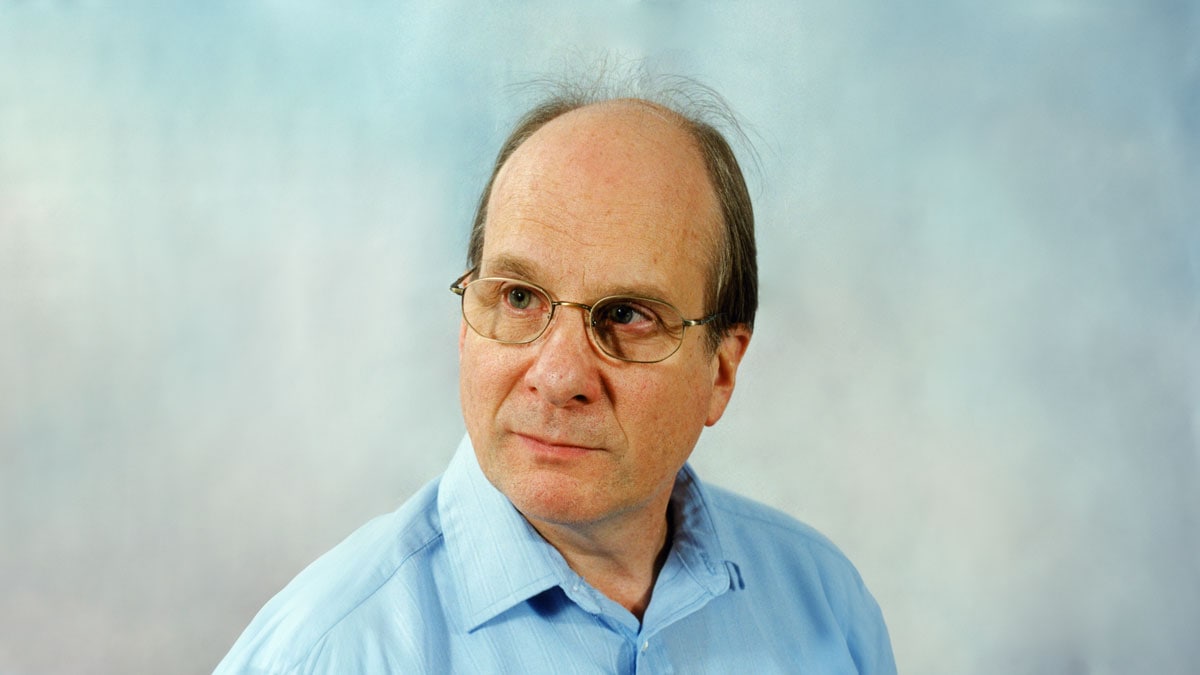
Before turning off your QLED TV tonight, or the bedside lamp powered by electricity generated from sunlight captured in solar cells, please take a moment to remember Louis E. Brus.
These everyday amenities would not be possible without his groundbreaking discovery of quantum dots, which help illuminate computer monitors and television screens and which biochemists and doctors use to map biological tissue.
Brus, a long-time Bell Labs researcher and winner of the 2023 Nobel Prize in Chemistry, passed away on January 11. He was 82.
Brus worked at Bell Labs from 1973 to 1996. While studying organic photochemistry to improve the efficiency of solar batteries, he created the tiny nanocrystals that later became quantum dots in 1983 and noticed that their color depended on their size.
In true Bell Labs spirit, he didn’t dismiss the observation but rather embraced quantum physics to help explain the wavelength dependency of the semiconductor particle size.
Today, this is known as the Brus equation and quantum dots have become a transformative technology used by people all over the world for a variety of applications such as displays, imaging, lasers and catalysts for chemical reactions.
The discovery earned Bell Labs our 10th Nobel Prize, and only our second in chemistry. Brus shared the prize with Alexei Ekimov and Moungi Bawendi for the development of these nanoparticles so tiny that their size determines their properties.
We celebrated this achievement in a special event in Brus’ honor at our Murray Hill headquarters on April 30, 2024. There, Brus presented his award-winning research and his advice for young researchers following in his path.
“We are all trapped by our educational background. So, learn something new every day. This is the greatest skill we have,” he said. “What are your colleagues working on? Why is it important? In my life, I have always been searching for a better problem. The choice of problem is the most important scientific decision you will ever make.”
Born in Cleveland as the son of an insurance salesman, Brus attended Rice University in Texas on a U.S. Navy scholarship and was commissioned upon graduation. He was able to postpone his service to attend graduate school at Columbia University, where he received his PhD in physical chemistry in 1969.
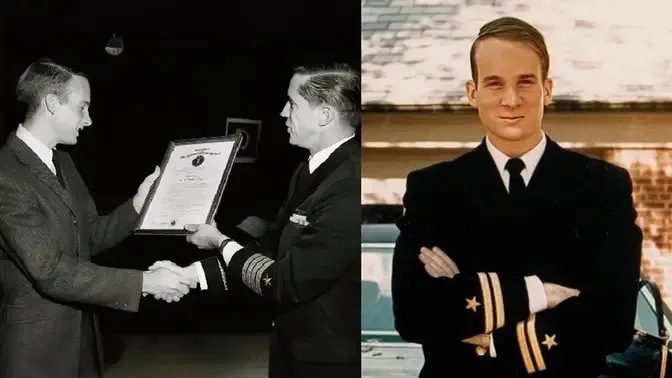
After completing his military service as a scientific staff officer at the U.S. Naval Research Laboratory in Washington D.C, Brus joined Bell Labs in 1973 and worked there for 23 years on solid state physics, materials and microelectronics. It was during that time that he began to be recognized as one of the leading nanoscience researchers for his work on colloidal nanocrystals. He continued his research at Bell Labs until 1996 when he joined the faculty in the Department of Chemistry at Columbia University.
He described his time at Bell Labs as a “privileged opportunity and existence.”
“When I was hired, Bell Labs was at its apex: it was the best place to do physical science research anywhere,” Brus said, upon winning the 2008 Kavli Prize in Nanoscience. “It was exhilarating and intimidating at the same time. How could I possibly do something on the same level as all the famous scientists in Bell Labs?”
Brus’ work on quantum dots generated a string of awards, capped by the Nobel Prize. In particular, the Nobel Committee for Chemistry cited Brus’ papers on a Simple Model for Quantum Size Effects and Quantum Size Effects in Nanoparticles.
In its announcement, the committee noted that the laureates succeeded in producing particles so small that compared to a soccer ball each one of these “dots” was as small as the soccer ball itself was compared to Planet Earth.
To us, Brus was a role model, and we are proud to have known him. It was an honor to have hosted him again last year as part of our centennial celebrations. Brus is survived by his wife, three children and four grandchildren. He leaves behind a remarkable legacy of scientific achievement, and he will be sorely missed.
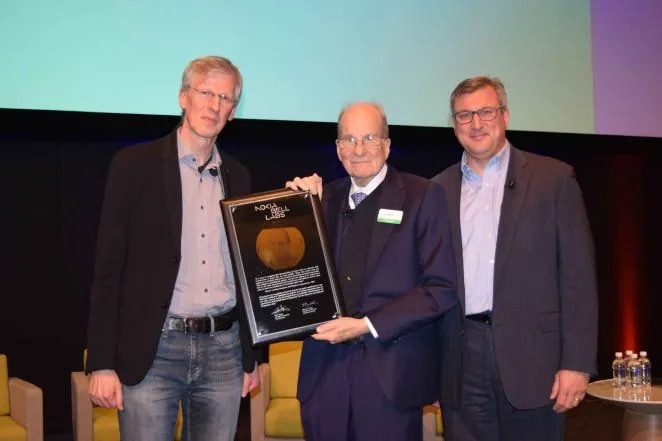
Louis E. Brus holding a plaque in his honor and flanked by Bell Labs Presidents Thierry Klein (right) and Peter Vetter (left)

