

Public sector
Delivering secure, reliable services connectivity for the public good

Advanced connectivity for public services.
Nokia advanced connectivity helps governments and public agencies deliver secure, reliable digital services that keep people safe and support their daily lives. High-performance connectivity ensures essential services like emergency response, education, healthcare and administrative services remain available whenever people need them. Built-in security and resilience help protect personal data, ensure service continuity, and build trust in the digital services people rely on in an increasingly digital world.
Our public sector focus
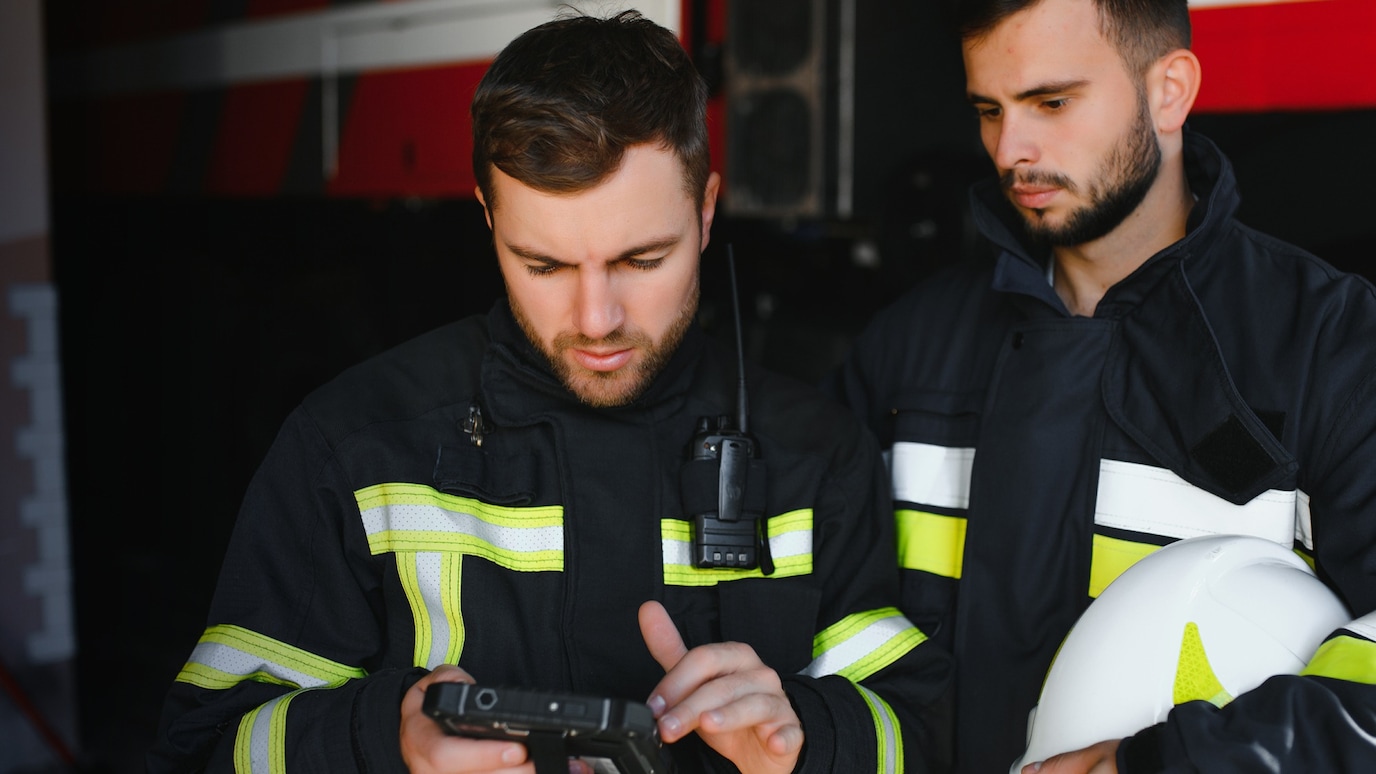
Public safety
The introduction of AI and new digital cloud-based applications, along with the increased need for multi-agency collaboration, are driving the evolution of public safety networks from legacy systems to broadband wireless, IP and cloud, while ensuring long periods of coexistence.
Networks are now life-critical infrastructure. They have heightened demands for resilience and availability and require a stronger focus on data sovereignty and security against cyber threats.
Connected territories
Whether it's about connecting schools, hospitals or public facilities, the connected territories and smart government market is in an active transition phase, moving from fragmented pilot projects toward integrated, city-and region-wide digital platforms
Connectivity and data infrastructure are increasingly viewed as strategic public assets, with growing emphasis on resilience, security and digital sovereignty.
Research and education
The research and education networks market is highly mature but continuously evolving, driven by relentless growth in data-intensive science, AI and high-performance computing. Networks are viewed as strategic national research infrastructure, with strong emphasis on openness, performance and international interoperability.
Operators face tight public funding and long upgrade cycles, pushing demand for scalable, standards-based architectures that maximize capacity, efficiency and longevity.
Why Nokia?
Network for public services in the AI cloud era
As a technology leader in communications systems, from wireless and core to optical, IP and data center switching, we’re delivering a safe evolution path from legacy TDM systems to digital technologies for the AI cloud era. We help you build secure, resilient and ubiquitous connectivity that supports critical public services, enable interoperability and ensures multi-agency coordination across urban and rural areas.
Network efficiency and resilience
We help you build resilient network architectures combined with automation and AI-driven network optimization to improve operational efficiency and strengthen network resilience, ensuring always-on, mission-critical communications for public administrations and facilities such as hospitals and schools.
Security and sovereignty
With our security-by-design approach, we ensure the highest levels of network security and sovereignty with a redundant and self-healing architecture, while our defense-in-depth approach allows the highest degree of protection against current and future cyberattacks in the post-quantum era.
Explore how Nokia solutions help the public


Quantum-Safe Networks in action: the Gigalis case study


The State of California upgrades its public safety communications network CAPSNET







Frequently asked questions
Public safety refers to the protection of people, property and communities from threats such as crime, disasters, accidents and emergencies. It includes services like police, firefighters, emergency medical services (EMS) and disaster response agencies.
Technologies like LTE and 5G standardized by 3rd Generation Partnership Project (3GPP) support secure, fast and reliable communication.
To ensure reliable communication during emergencies, even when public networks are congested.
Connected Territories refer to regions in which public operators provide connectivity to local and regional authorities, administrations, communities, and government bodies to support the delivery of public services.
Connectivity is essential for public safety and government operations, enabling secure video surveillance, mission-critical communications for emergency services, and reliable links between government buildings, data centers, and administrative systems. It also supports smart city infrastructure and public service delivery by connecting traffic systems, IoT devices, schools, healthcare facilities, and public Wi-Fi, helping cities become safer, more efficient, and better coordinated.
A smart city uses digital technologies like IoT, AI, and broadband connectivity to improve how a city operates and serves its citizens—making urban living more efficient, sustainable, and secure.
Reliable broadband is the foundation of every smart city. It connects people, devices, and systems—enabling real-time data sharing, automation, and intelligent decision-making across all city services.
A research and education network (REN) is a specialized internet and communication service provider that operates a private network built at the national, regional or state/provincial level to serve and interconnect research and scientific communities. Research universities and governments all use RENs to collaborate and exchange knowledge, accelerate discovery and foster innovation.
Learn more

Blog

Blog
Blog

Case study
White paper
Blog

Video
Quantum-Safe Networks in action: the Gigalis case study
Blog