Overview

Broadband technologies
Overview of FTTH PON, P2P, fixed wireless access, and G.fast fiber-extension technologies
Learn the fundamentals of different Gigabit fiber broadband technologies including PON, FWA and G.fast.
There are various PON technologies available, including EPON, 10G EPON, GPON, XGS-PON, TWDM-PON, 25G PON etc., each with their own performance capabilities. Operators choose a technology for various reasons: cost, service focus (including bandwidth and other performance criteria), competition, business priorities, timing, or usually a combination. Different flavors of PON help operators to diversify their service offering and compete more effectively
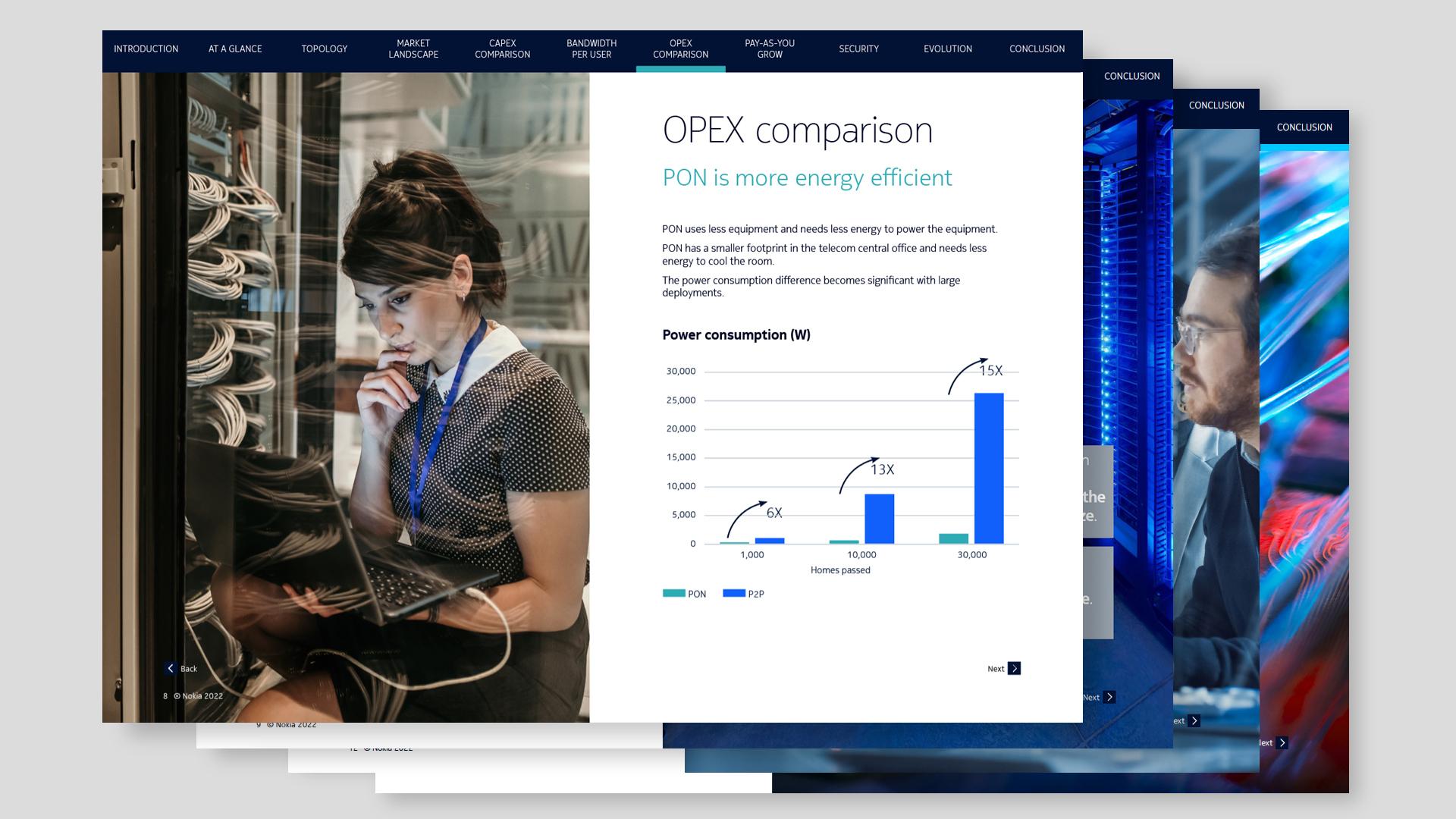
Point-to-point (P2P) and passive optical network (PON) are different ways of providing broadband services over optical fiber. P2P uses a dedicated fiber to each user, whereas PON uses one fiber feeder which is split to connect multiple users. For this reason, P2P is more expensive to deploy and operate. Both provide excellent bandwidth and evolution paths to newer technologies. PON is better suited to massive broadband connectivity. PON is far more prevalent than P2P and hence has a larger ecosystem of components and providers.
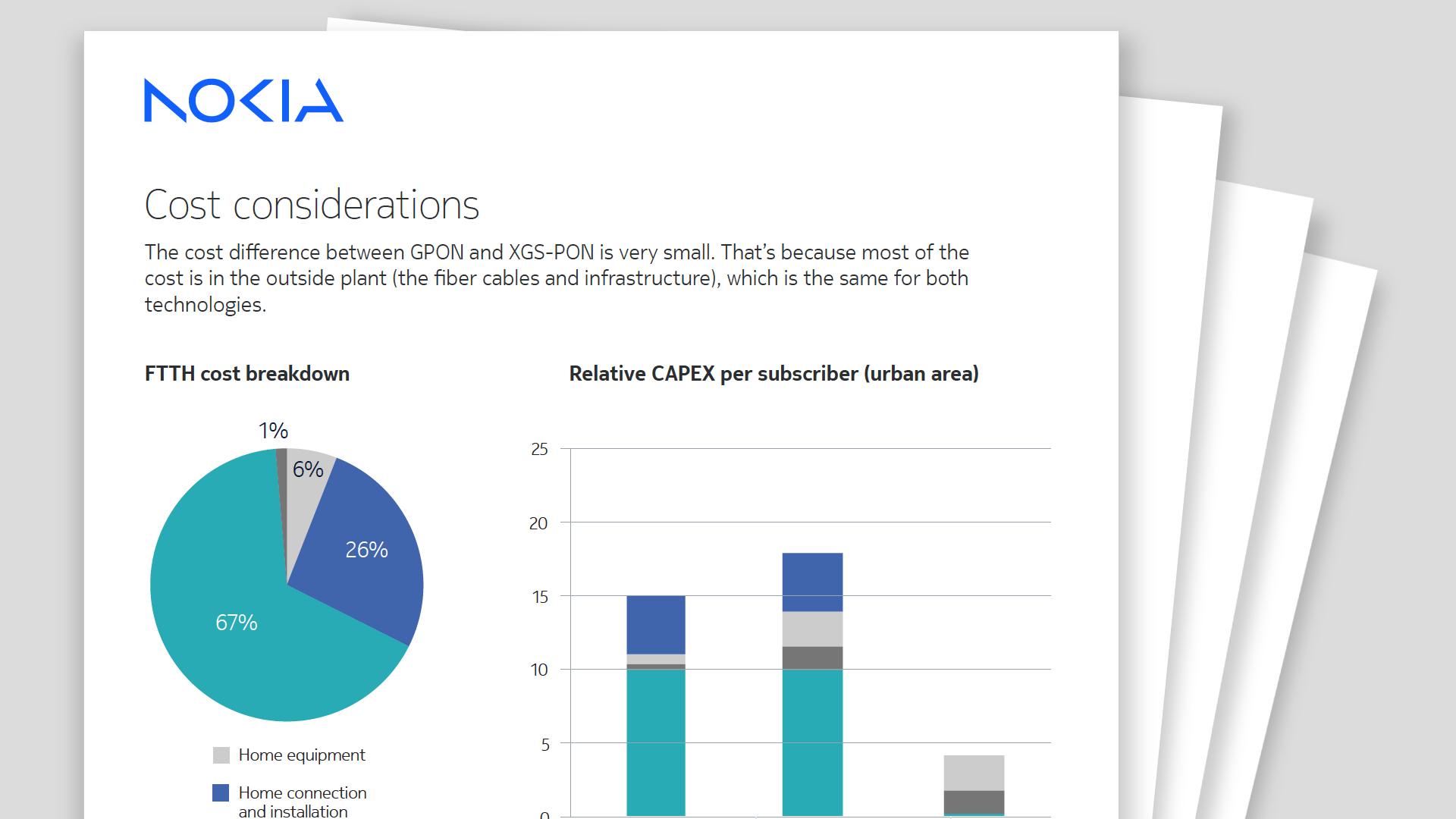
GPON is proven for delivering Gigabit broadband and is the most widely deployed FTTH technology today. But XGS-PON is a game changer, and there are some very compelling reasons to go straight to XGS-PON. Each operator needs to consider cost (initial CAPEX, OPEX, and future investment cycles), bandwidth demand (current and future), revenue generating opportunities, and the competitive landscape. Innovative solutions like Multi-PON make the choice simpler and the business case more compelling.
Benefits to an XGS-PON upgrade are:
- Gaining competitive advantage by enabling symmetrical gigabit and multigigabit access
- Creating monetization opportunities through premium service offers, wider range of pricing options, and services convergence
- High value at low cost; leverage existing fiber assets for an easy introduction

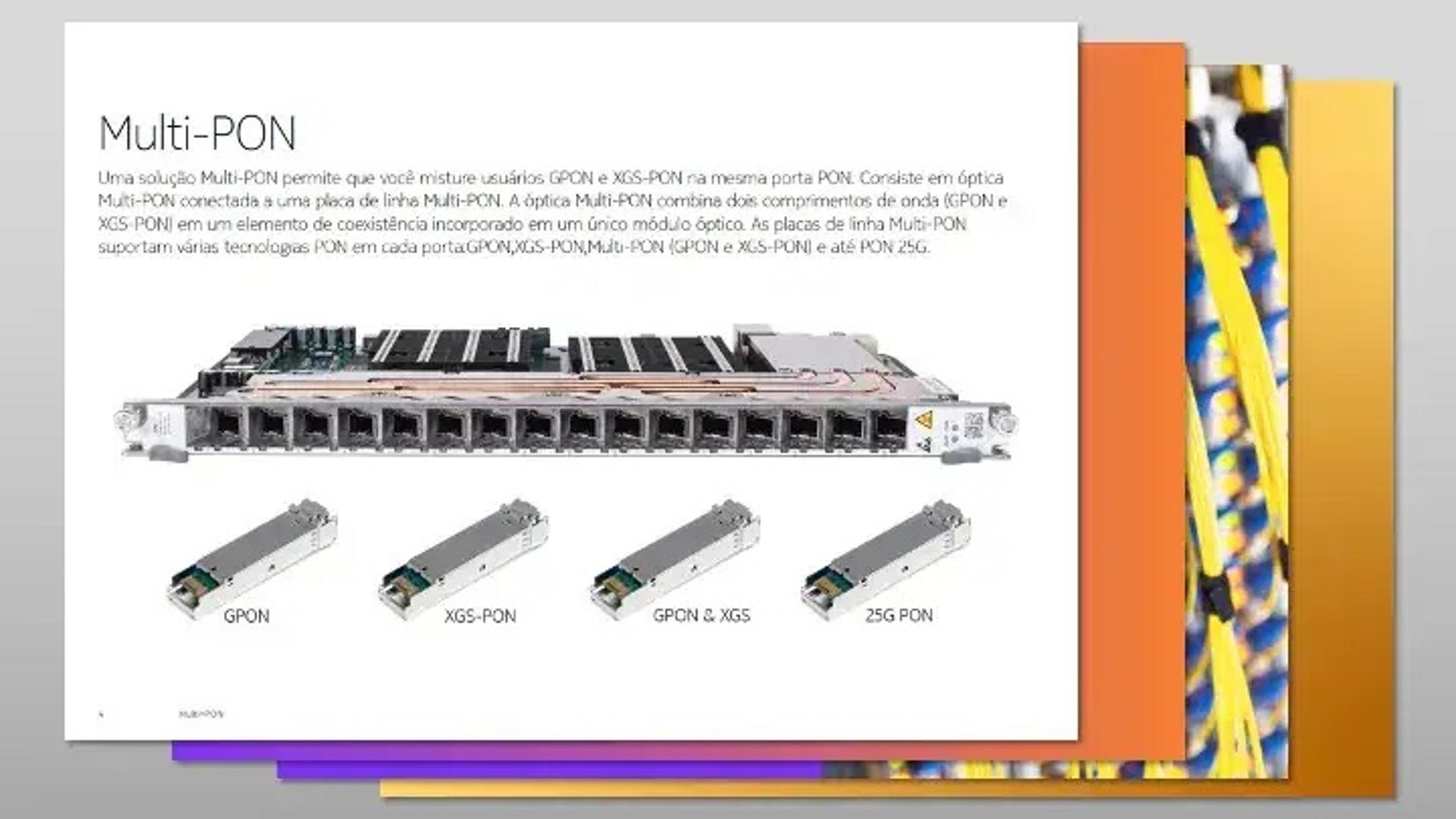
The Multi-PON line card supports different types of optics: GPON, XGS-PON, Multi-PON or 25G PON. If used with Multi-PON optics, the Multi-PON line card can support both GPON and XGS-PON simultaneously on the same card; for example, GPON for residential users and XGS-PON for business users. Multi-PON creates a future-proof network as it enables a simple, smooth, and cost-effective migration path from GPON to XGS-PON and beyond.
White papers
Multi-PON
(opens in a new window)As a shared medium, FTTH PON uses multiple methods to separate, encrypt and secure data on the network to provide mission critical security on a par with dedicated point-to-point connections. User traffic is protected by AES encryption. Control messages are carried in the GEM code, so are also encrypted. On top of that, there are message integrity checks. Combined, they provide maximum protection against data being intercepted as well as maximum protection of the data itself.
The optical power budget represents a maximum allowable loss in the optical link between OLT and ONT. As signal travels through the network, it is being attenuated due to losses in the splitters, connectors etc. The optical power budget directly impacts network performance and reliability. To calculate the optical budget, you need to consider the total link length (distance between OLT and ONT), splitting ratio, fiber attenuation and safety margin.

25G and 50G PON both deliver greater capacity over current GPON (2.5G capacity) and XGS-PON (10G capacity) technologies. The main considerations for which to choose beyond 10G are demand, cost and ease of deployment. 25G PON is a straightforward evolution able to co-exist alongside GPON and XGS-PON in the same network. It is also available today. 50G PON is a technology leap that will need several years to reach commercial maturity. Both have a role to play in the future of broadband: 25G now, 50G by end of the decade.

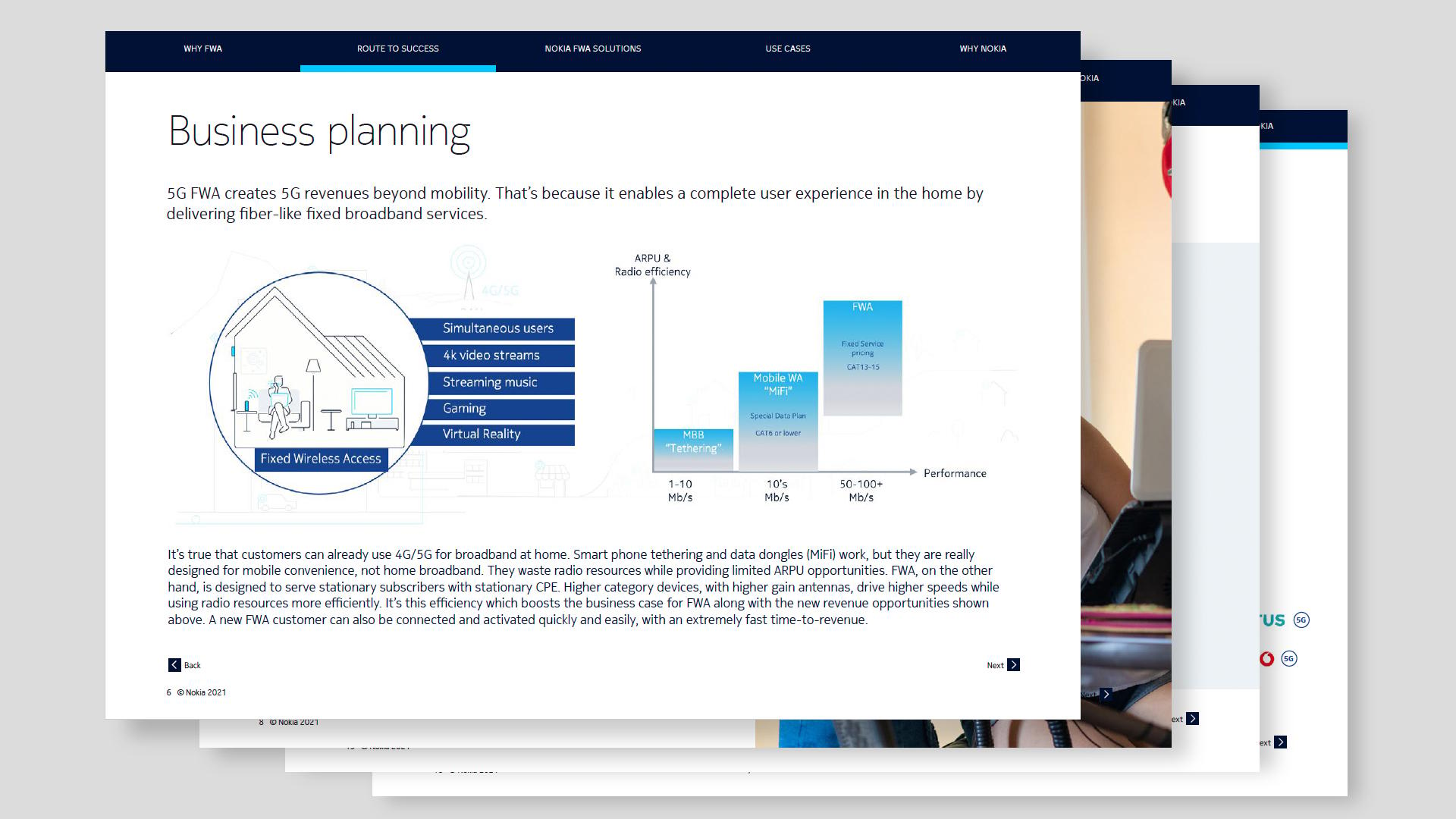
5G FWA (Fixed Wireless Access) benefits mobile operators as it allows them to gain market share quickly and generate new revenues beyond commodity mobile broadband with competitive bundles. For converged operators with both mobile and fixed networks FWA is an additional tool to expand fixed services and the benefits include:
- 5G FWA can be deployed in rural locations where the economics of fiber are not viable.
- Used to plug any coverage gaps in fiber-to-the-home (FTTH) rollouts so that no home is left out.
- Converged operators can deploy FWA ahead of a future fiber rollout to keep customers loyal.
- Operators can compete outside of their fixed network territory to grab new market share.
- Retire old copper networks.
Key challenges faced by Fixed Wireless Access:
- You need know which subscribers can get a good FWA service by pre-qualifying your coverage areas.
- You must have spare cell capacity, which you can check with RAN capacity management tools.
- Keep costs under control with user self-install guided through a mobile application.
- To guarantee service levels, use network slicing to protect and prioritize bandwidth, and good network management tools to manage the service end-to-end.

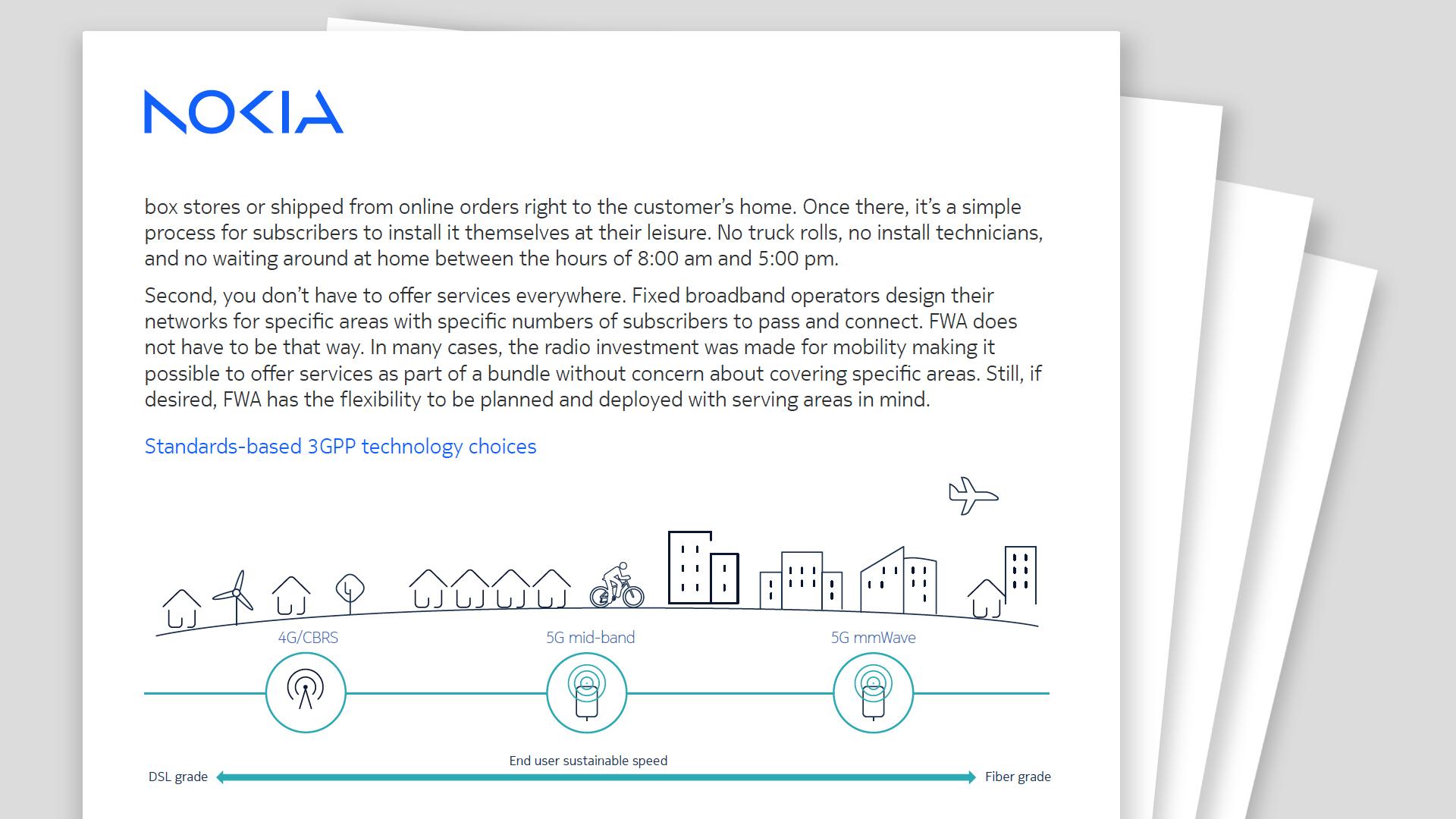
The technology you choose depends on the wireless spectrum available and the speeds needed for a competitive service. 4G can deliver basic broadband services and, since they cover long distances, both 4G and CBRS are good tools for rural broadband services. 5G in the mid-bands adds 10-15x the capacity making it possible to offer speeds in the hundreds of Mb/s. Gigabit services can be achieved with mmWave but this comes with additional complexity due to attenuation of its high frequency signals.
Some myths have persisted about the viability of deploying 5G mmWave for FWA services. But the truth is that 5G mmWave FWA is suitable for urban, suburban, and rural locations. It is suitable for covering distances of 10km or more. It can be used in non-line-of-sight locations. And 5G mmWave FWA can deal with environmental changes over time, such as foliage growth.

Optical LAN is a fiber networking technology used for enterprise applications. Compared to a CATx cable network found in traditional local area networks, it requires less equipment, cabling, floor space, and significantly less power. It also brings the future-proof capacity and performance of fiber networking. It is particularly advantageous in multi-floor buildings, extended campus networks, and for applications using lots of data.
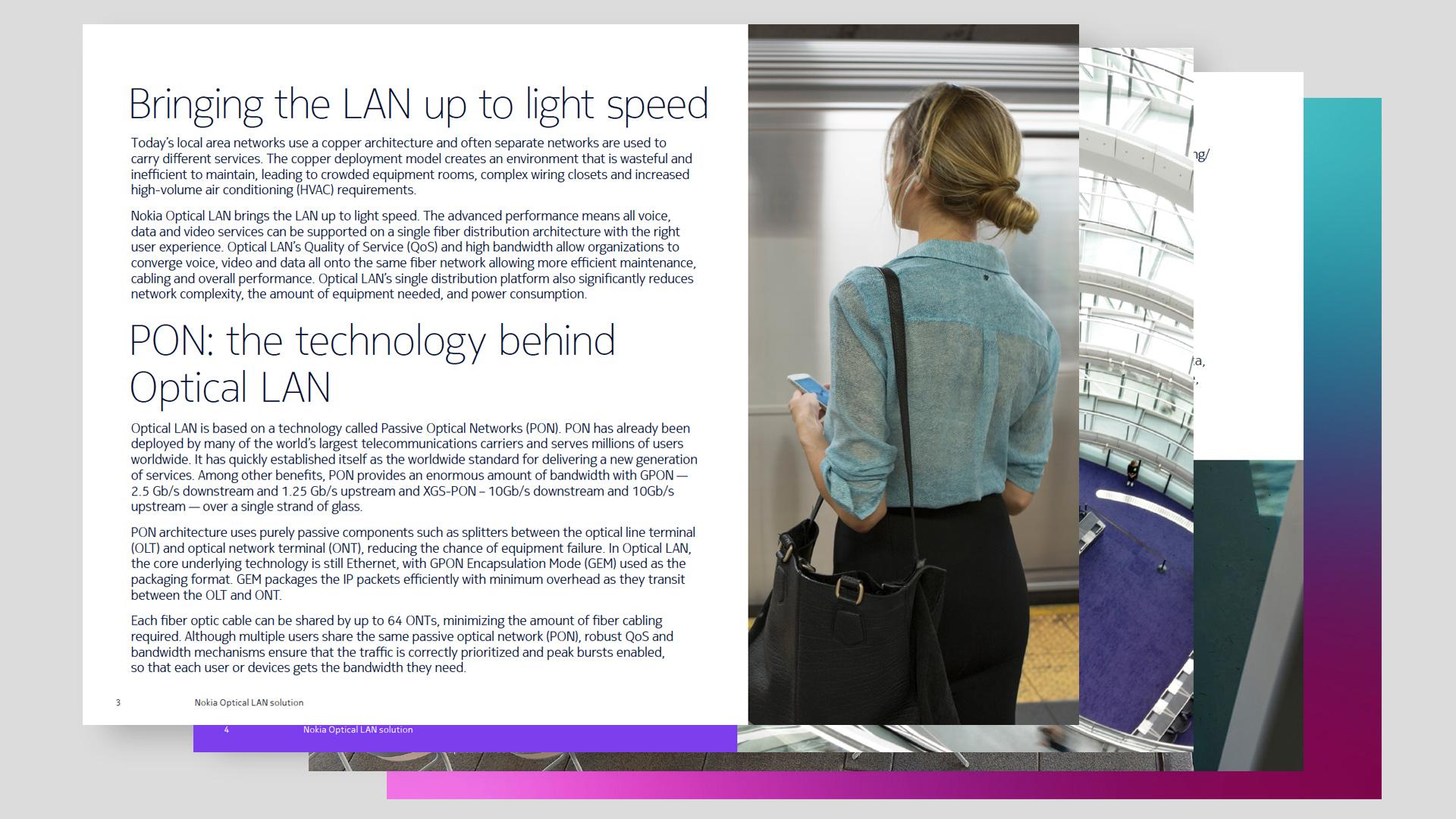
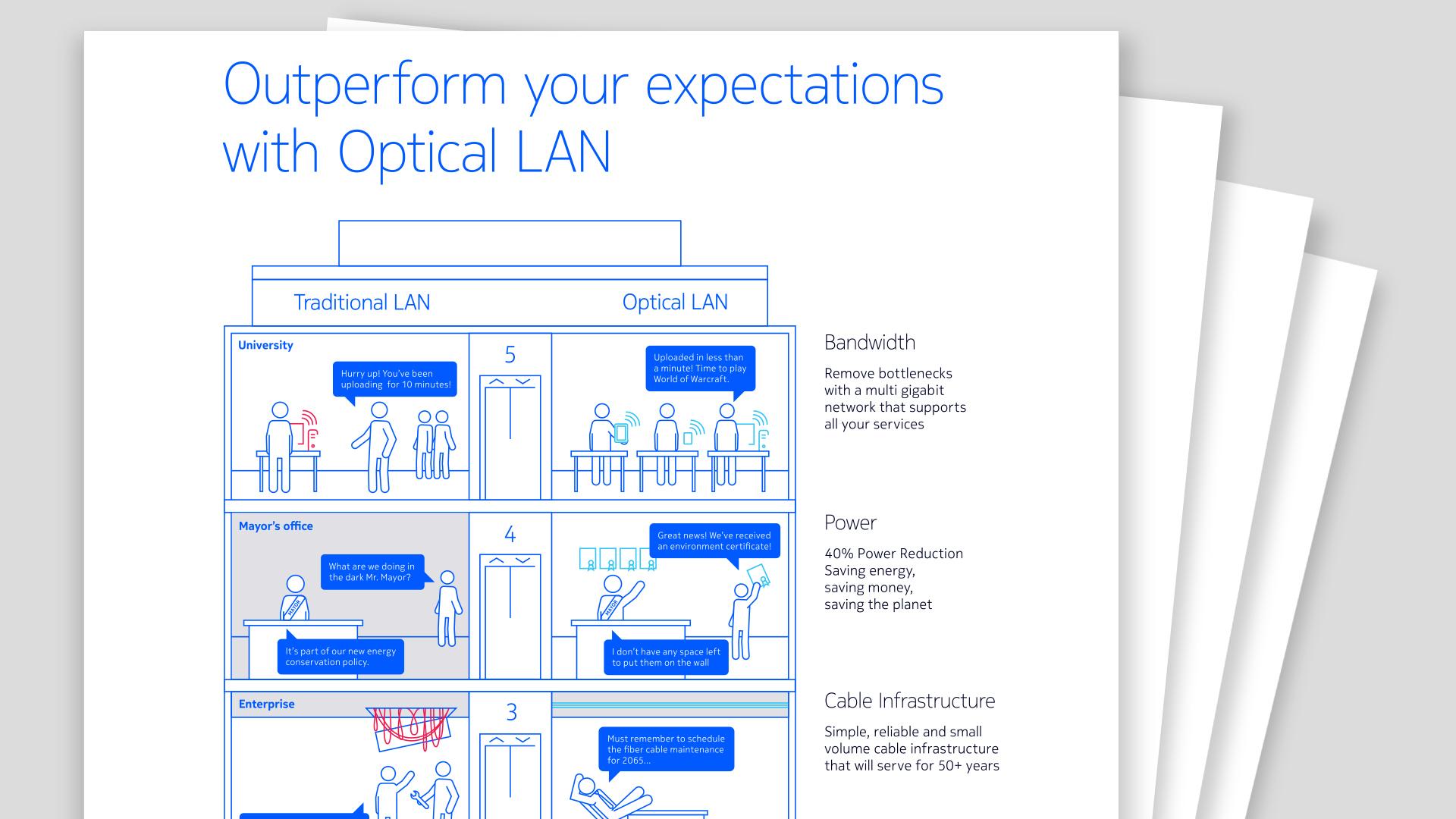
Optical LAN costs less and brings more value than a traditional Ethernet local area network. The main benefits are:
- High performance of fiber broadband with 10 Gigabit and higher speeds.
- Mission critical security.
- Lower costs by using less equipment, less power and less maintenance.
- Less space needed for IT and 200x greater area coverage.
- Futureproof with cost-effective network evolution.
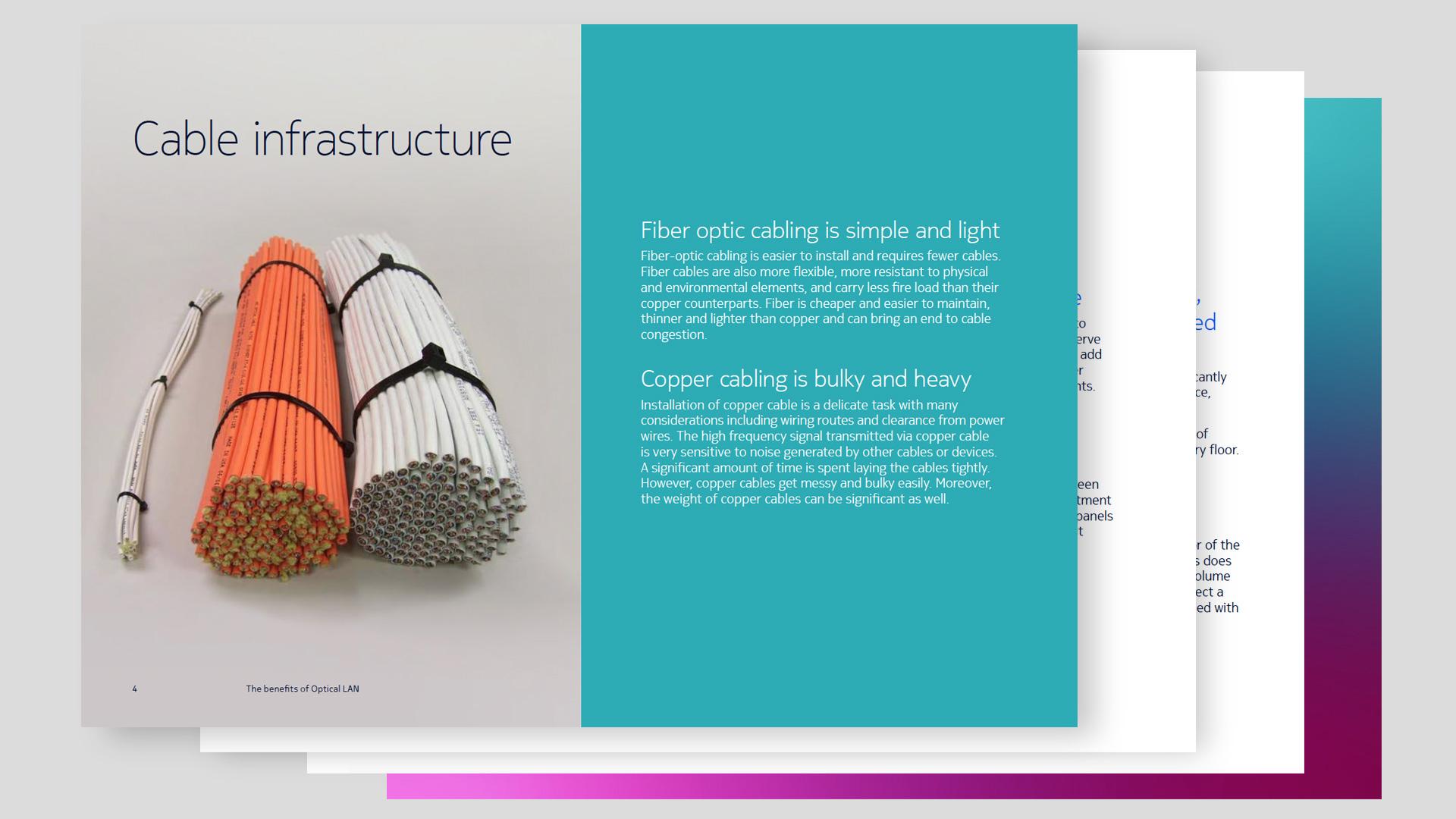
Local area networks have been used for decades, with few substantial changes to the basic design of traditional copper-based Ethernet networks. However, the performance and physical characteristics of CATx cabling impose a number of limitations such as bandwidth, floor and cabling space, security, and power consumption. Optical LAN eliminates these limitations with fiber optic cabling and passive optical network (PON) technology that deliver all services on one efficient, high-capacity network.
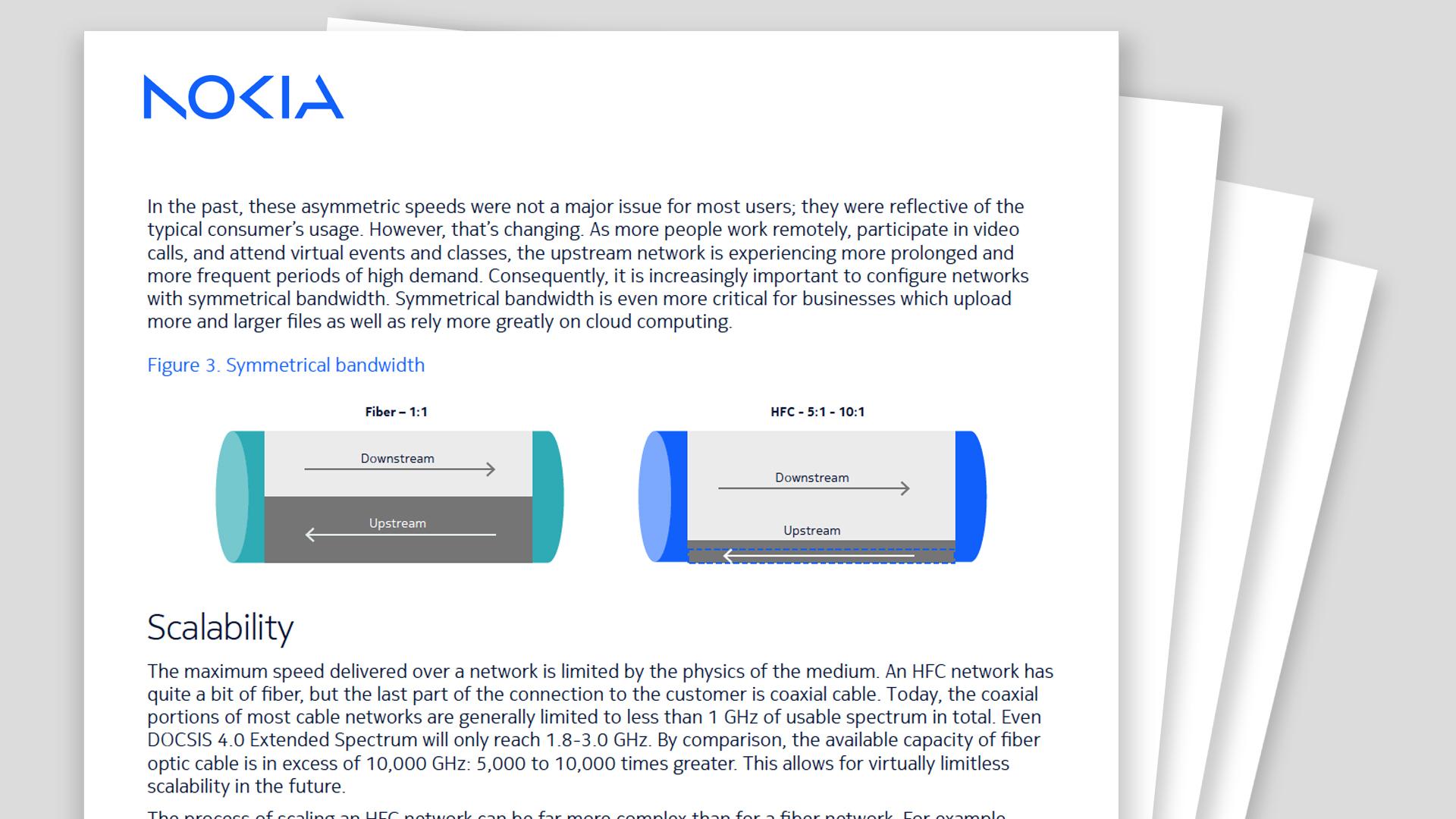
There are many aspects to consider in evaluating network technology and architecture, so there is no definitive answer. However, on almost every measurement criteria, a PON FTTH is superior to DOCSIS 4.0. First, broad commercial deployment of DOCSIS 4.0 won't likely start before 2024; XGS-PON already provides 2.5x the capacity that full-duplex DOCSIS 4.0 is supposed to. In addition, PON FTTH is more scalable, more reliable, has better signal quality and much lower total cost of ownership.