

High-performance computing (HPC) and AI factories
Enabling AI-driven discoveries

HPCs and AI factories: Powering AI-driven research
High-performance computing and AI factories are becoming central to the research missions, moving massive volumes of data for AI training, inference and scientific computing. As AI models grow and become more complex, institutions must rapidly scale their infrastructure to deliver the extreme bandwidth and ultra-low latency required for distributed computing. At the same time, they need to control energy consumption, improve the sustainability of AI infrastructure and protect valuable assets — including AI models, training data, intellectual property and sensitive research data — from cyberattacks.
Shorten the path to discovery
Accelerate research and move faster from computation to discovery.
Foster collaboration through shared compute engines
Enable collaboration across campuses and institutions across big GPU clusters.
Scale AI innovation with confidence
Scale HPC and AI infrastructure securely and efficiently as workloads, data volumes and GPU clusters grow.
Discover our HPCs and AI factories solutions
Data center networks
Turn your data center into the nervous system of AI.


Quantum-safe networks
Protect critical infrastructure and data from future quantum-computing attacks.
Featured insights
Video
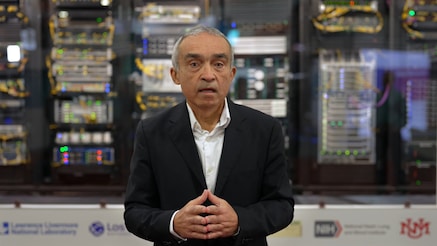
Nokia network solutions for High-performance Computing data centers
At Supercomputing 2024, Nokia contributed its IP and optical networking equipment and engineering services to infrastructure development for SCINet.

Press release
Nokia and Hypertec Group to Power Breakthrough Research Across Health, Climate and AI with SHARCNET’s Nibi Supercomputer at the University of Waterloo
Nokia and Hypertec Group powered breakthrough research across health, climate and AI with SHARCNET’s Nibi Supercomputer at the University of Waterloo.
Why choose Nokia for HPCs and AI factories?
Nokia’s AI data center networking solutions are designed to deliver deterministic performance, scalability and reliability at scale, using high-speed Ethernet, open and programmable network operating systems and automation built for large and complex environments. As a member of the Ultra Ethernet Consortium, Nokia is helping evolve Ethernet to better support AI and HPC workloads through advancements in lossless transport, congestion control and interoperability.
Frequently asked questions
They're large, shared computing facilities built to run work that no single machine or lab could handle: scientific simulation, modeling and AI training. In practice that means big clusters of GPUs working on one job together, exchanging data continuously and at high volume. They are connected to regional research networks, national labs and cloud providers, and are shared across campuses and collaborating institutions.
Scientific and research workloads depend on many machines staying tightly in step. AI training and HPC rely on synchronized communication across large GPU clusters and predictable behavior under sustained loads, which magnifies the impact of latency and congestion in ways traditional university IT data center designs were not built to accommodate.
Advanced connectivity provides deterministic performance, scalability and reliability at scale, achieved with high-speed Ehernet, an open and programmable network operating system, and automation built for large, complex environments. Innovation in lossless transport, congestion control and interoperability matter here, because predictable performance and scalable fabrics directly influence research outcomes.Advanced connectivity provides deterministic performance, scalability and reliability at scale, achieved with high-speed Ehernet, an open and programmable network operating system, and automation built for large, complex environments. Innovation in lossless transport, congestion control and interoperability matter here, because predictable performance and scalable fabrics directly influence research outcomes.
Learn more

Blog

White paper

Blog

Blog

Blog

Blog

Blog
Blog
Get in touch with our research and education team
Please complete the form below.
The form is loading, please wait...
Thank you. We have received your inquiry. Please continue browsing.