Bridging the digital divide in rural communities worldwide
People and Planet impact snapshot
new mobile broadband subscriptions enabled by Nokia’s networking technologies in 2025
fiber connections used in U.S. rural broadband deployments are provided by Nokia
Mobile networks now cover 92% of the world, yet 2.2 billion people — more than a quarter of humanity — remained offline in 2025. Rural communities are the most likely to be without access to reliable connectivity, as sparse populations and isolated locations make traditional networks challenging to operate. As the world grows more digital, connectivity is increasingly tied to employment and educational opportunities, as well as essential services like healthcare, utilities, emergency response and public administration. That is why, one of the key pillars of Nokia’s sustainability strategic focus areas is to bridge the digital divide - in connectivity and in access to opportunities.

In Indonesia, we are working with the telecommunications company Indosat Ooredoo Hutchison and NVIDIA, which supplies AI chips and software, to turn the country’s mobile network into AI infrastructure. The deployment will enhance network capacity, performance, and coverage across Indonesia, while supporting Indosat’s long-term ambition to expand digital access more inclusively nationwide.
Our ready-to-install Nokia Rural Connect solution makes it easier for mobile operators to extend service in areas where standard cell sites aren’t feasible. Rural Connect reuses retired network hardware, powers sites with renewable energy, and utilizes Low Earth Orbit (LEO) satellite backhaul to enable cost-effective, resilient connectivity in some of the world’s most remote places.
The first pilot in rural Cameroon reused existing radios and ran fully on solar power, enabling a fivefold increase in local mobile users within two weeks. In November 2025, telecommunications provider Airtel Madagascar launched the island’s first fully off-grid Rural Connect sites, reaching thousands in remote coastal communities with no prior access to mobile connectivity.
In South Africa, Nokia’s customer fibertime is expanding its fiber broadband access footprint to include an additional 400,000 homes located across South Africa’s underserved communities. The agreement to connect an additional 400,000 homes builds on a previous announcement between Nokia and fibertime to deploy FTTH networks across Cape Town, Johannesburg, Gqeberha, Mangaung and Stellenbosch, and is part of fibertime’s larger goal of connecting 2 million homes by 2028. Fibertime will deploy a combination of Nokia’s IP and fiber access technologies to build semi-mobile networks in underserved areas, providing end-users with unlimited high-speed internet from anywhere in their home, business or community they live in.
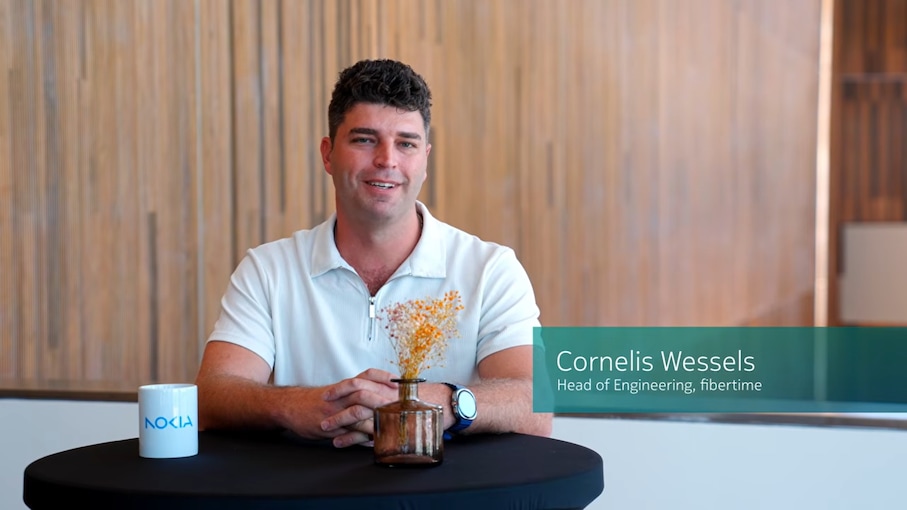
Fibertime and Nokia: bringing broadband to South African townships
Bridging the digital divide and connecting the unconnected through innovative broadband solutions is central to what we do at Nokia, with our radio customers seeing a 272 million increase in mobile broadband subscriptions on their networks in 2025. Extending access not only ensures fewer people are shut out of critical services, but also helps us reach new markets, uplift fresh talent pools, and help unlock billions in economic value associated with digital connectivity.
Expanding rural broadband access
But the digital divide is not only an issue for the Global South. It’s experienced by rural communities all over the world. In the United States, nearly 26 million people live without broadband, mostly in rural areas. Nokia is working to expand rural broadband access further across the United States to connect more people to essential services and economic opportunities.
In the U.S. Midwest, Nokia partnered with Bridged Broadband to create a new network spanning approximately 2,500 route miles, which includes 47 points of presence (PoPs) across Missouri, passing through multiple states and connecting to Kansas City. By combining high-capacity optical and IP technology with intelligent automation, the project will extend Tier-1 network capabilities to historically underserved regions with the aim of strengthening economic development.
To the west in Reno, Nevada, in 2026 SkyFiber chose Nokia to build a fiber-optic network partly funded by BEAD, the federal Broadband Equity, Access, and Deployment program. The new network combines high-capacity optical and IP technology with intelligent automation to bring broadband to thousands of homes that have never before had access, helping towns in northern Nevada attract and retain residents and businesses.
Nokia was the first telecom company to announce the manufacture of fiber-optic broadband network components in the U.S. for use in the BEAD program. In another BEAD-funded project, Planters Broadband Cooperative recently selected Nokia to build an AI-ready fiber network for homes and businesses in previously underserved communities across southeast Georgia.
Nokia has a deep commitment to closing the digital divide in rural America and worldwide, with 7 out of 10 ports used in U.S. rural broadband deployments provided by Nokia.