Beyond connectivity: Building the intelligence layer for mission-critical operations
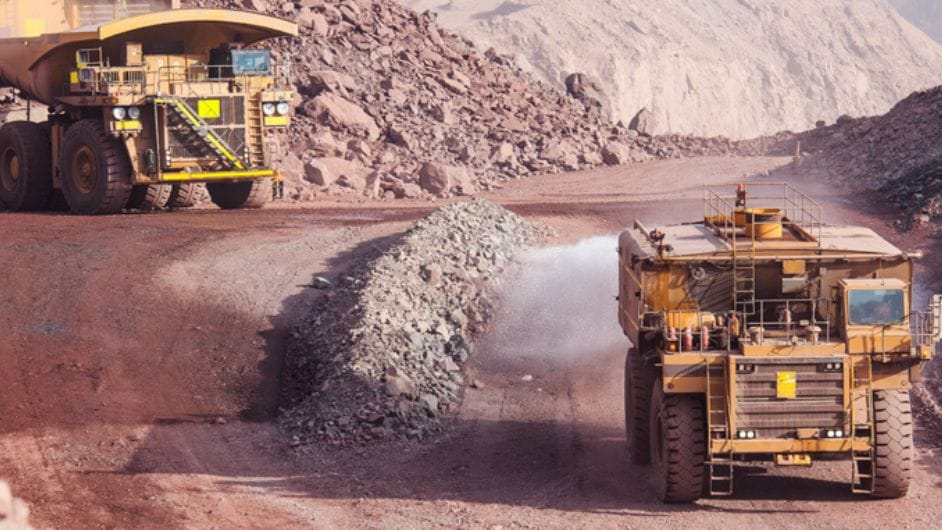
“You connected my entire operation. Now what comes next?” This question, posed by a technology leader at one of the world’s largest mining companies, captures a challenge many mission-critical organizations now face.
For years, the telecommunications industry has treated connectivity as the destination. But for operators running mines, defense programs and emergency response networks, connectivity is only the starting point. Once assets, people and systems are connected, the next requirement is to make that connected environment intelligent, responsive and resilient.
This realization began during my time heading the network application research department at Nokia Bell Labs — and it has only sharpened since moving to lead the operations that are now building the answer. The most important insight did not come from a lab environment. It came from standing at the edge of a mining operation and seeing firsthand how much depends on critical operational decisions being made in real time, under harsh conditions and with no room for failure.
In these environments, critical operational systems and field data are often spread across a patchwork of point solutions that were never designed to work together. One vendor addresses fleet tracking or vehicle diagnostics. Another focuses on operator fatigue. A third helps solve network performance problems. Each brings its own hardware, software, data model and support structure.
The result is a connected operation, but not an intelligently connected one. For example, there is no automated way to correlate an alert in a truck monitoring system with a defect in the mine road surface. Too often, the burden still falls on people to sift through historical data in search of patterns that should already be visible.
This reflects a much broader challenge across mission-critical industries. Critical operations are often highly connected, but not yet truly intelligent. Data exists, specialized systems exist and connectivity is in place. But intelligence is still missing because information remains fragmented across tools from multiple vendors that were never designed to function as a single operational fabric.
The gap between connected and intelligent
Many mission-critical operators have deployed point solutions to solve specific problems, such as fleet management, worker safety, communications, situational awareness or analytics. Each solution may deliver value on its own, but together they often create a fragmented operating environment.
The challenge is to address the complexity of integrating disparate systems and introduce intelligence across these systems to close the operational gaps between them. In these gaps, critical signals can be missed, decisions can be delayed and operators can lose visibility at the exact moment they need it most.
Connected operations are not the same as intelligent operations. The next stage of digitalization is about closing the gaps and giving operations teams the intelligence to see more, respond faster and make better-informed decisions.
Why unification matters
Another isolated tool or lengthy integration project won’t solve the problem. What mission-critical operators need is a unified intelligence layer that spans the operation, understands context across systems and can act at the point of consequence.
This layer must work in the environments where centralized architectures often fall short, such as underground, in remote locations, in congested or contested conditions and during the first minutes of an incident. It must make decisions locally, in milliseconds, and continue operating even when cloud connectivity is unavailable.
What this looks like in practice
In mining, unplanned downtime can arise even when every system reports that its own layer is functioning correctly, because no one has visibility across the full chain of events. A poor section of haul road, for example, may increase component stress on trucks and lead to earlier-than-expected maintenance. The issue sits in the operational gap between environmental conditions and asset performance, where correlation is often missing.
In defense, situational awareness can degrade when communications resilience is limited. Multiple access technologies may be available, but if the communications fabric is not intelligent enough to use them concurrently and switch seamlessly between them, command information may not be as real time as operations require.
In public safety, the first vehicle on scene needs to bring communications, coordination and situational awareness together immediately, without depending on preexisting infrastructure. Today, this role is often played by dedicated command vehicles that may arrive later. A more adaptive model would allow every vehicle to contribute to the operational umbrella from the moment it arrives, with capabilities that scale as more units reach the scene.
From connected to intelligent
At Nokia, this thinking has shaped the development of a purpose-built edge foundation for mission-critical environments. It is designed to bring communications, compute and operational awareness closer together so organizations can move beyond connectivity alone and toward more cognitive operations across the site or incident environment.
This foundation is built on three key pillars:
- Resilient communications: Operations must be able to use the best available connectivity path, including 5G, satellite and Wi-Fi, and adapt dynamically as conditions change.
- Deterministic decision-making: Systems must be able to act locally, in real time and without waiting for manual intervention or distant cloud compute resources.
- Reliable edge compute: AI and analytics must run where the work happens, be that on the machine, in the vehicle or at the edge of the site, because the most demanding environments are often the least cloud-accessible.
Bringing these three capabilities together in one solution will help define the next era of mission-critical digitalization.
The initial focus is on industries where failure is not an option, including mining, defense and public safety. It builds on our heritage in mission-critical networks, while reflecting direct input from operators that have highlighted where existing approaches fall short.
Innovation through partnership
This is not a challenge any one company can solve. Progress depends on close collaboration between operators, technology providers and integration partners that understand the digital stack and the realities of the physical environment.
For organizations that run complex, high-risk operations, there is an opportunity to rethink what digitalization should deliver: not only connectivity, but intelligence that is unified, resilient and actionable at the edge.
This shift is now underway, and it will help define how mission-critical operations become safer, more efficient and more adaptive.
We will be sharing more about this work soon. For organizations in mining, defense and public safety, the opportunity ahead is significant: to connect not only assets and people, but also the intelligence needed to make critical operations safer, faster and more adaptive.