What is a Standard Essential Patent (SEP)?

Much of the connected world relies on shared technology standards that allow devices and services to interoperate seamlessly. But these standards don’t happen by chance. They are forged when innovators contribute their best, cutting-edge patented technologies to a shared framework. By channeling peak R&D into the standardization process, industry contributors push standard specifications far beyond baseline performance. When a patented invention is indispensable to implementing these advanced specifications, it becomes known as a Standard Essential Patent (SEP), the underlying engine powering everything from mobile connectivity to the Internet of Things. In this blog post, I explore what a SEP is, how it relates to standards, and why licensing plays such an important role in today’s technological ecosystem.
What is a patent?
Think about how often you rely on technology without really noticing it—your phone joining a Wi-Fi network, a video starting instantly on your tablet, or a message reaching someone on the other side of the world. Behind many of these everyday moments are inventions protected by patents.
So, what is a patent? A patent is a legal right that grants protection for an invention. It gives the patent owner the right to stop others from using that invention without permission or license others to use the invention usually for a fee.
Patents matter because they help reward investment in research and development (R&D) and promote the dissemination of the results of that investment. In exchange for patent protection, inventors disclose how their invention works, adding to the shared pool of technical knowledge. If another company wants to use it, it will usually need to take a license.
What makes a patent essential to a standard?
Technology standards, such as 5G, are collaboratively created and continuously improved by industry experts who select the best-performing inventions available to create new and ever-advancing systems. These inventions are typically protected by patents. When a patented invention is included in a technology standard it is necessary to use the invention to implement the standard, and the patent is considered a Standard Essential Patent (SEP). If a company wants to build a product that follows the standard, it cannot avoid using the patented invention covered by the SEP.
A simple way to think about it is this:
- A regular patent may cover a feature a company can choose to use or not use.
- A SEP covers technology that must be used to comply with a specific standard.
So while every SEP is a patent, not every patent is a SEP.
How patents and standards work together
Technology standards are the foundation of the connected world. They make it possible for devices, networks, and services to work together reliably across companies, markets, and continents. That’s why:
- smartphones can connect to mobile networks worldwide
- laptops and smart devices can join Wi-Fi networks
- video can stream efficiently across platforms and devices
- connected cars can communicate with surrounding infrastructure
When patented inventions become part of widely used standards, they help enable interoperability. This is especially visible in areas such as mobile connectivity, where 5G essential patents protect technologies used at scale.
Collaboration behind global standards
Standards are developed through global collaboration. Engineers from companies across the industry come together through standards development organizations (SDOs) and partnerships to share ideas, test solutions, and refine proposals. One example is 3GPP, where delegates from more than 850 companies take part in developing widely used communication standards.
The most effective solutions are then selected and built into the final standard. This creates a shared foundation that companies around the world can build on.
Nokia’s contribution to SEPs
Nokia is one of the companies contributing to the global standards ecosystem, with experts participating in more than 300 standardization and industry organizations.
We also hold more than 26,000 patent families, including a significant SEP portfolio with over 8,000 patent families declared essential to 5G standards. These inventions are used in standardized technologies found in billions of connected devices worldwide, from smartphones and network infrastructure to IoT-enabled industrial systems and vehicles.
Understanding SEP licensing
Standards create the most value when they are widely adopted. When a standard includes inventions protected by patents, SEP licensing provides a way for companies to use them.
In simple terms, it’s the process through which a patent owner grants permission for others to use technologies that are essential to implementing a standard.
The basic idea is straightforward:
- Standards define how technologies should work together.
- SEPs protect the inventions required to implement those standards.
- Licensing authorizes companies to use those inventions.
In many cases, SEP licensing is organized through company licensing programs that make essential patented technologies available to implementers. At the heart of the process is the goal of reaching a FRAND license agreement in a timely and efficient way.
FRAND terms in SEP licensing
A key idea in SEP licensing is FRAND, which stands for Fair, Reasonable and Non-Discriminatory. It means that when a company contributes patented technology to a standard, it commits to making that technology available on terms that strike a balance between the interests of the company to be rewarded for the value of the technology they have contributed and the interests of making the standard broadly available. Ultimately, SEP licensing on FRAND terms compensates innovators for the use of their standardized technologies and keeps the wheels of innovation turning.
The aim is to keep the system balanced:
- Innovators can receive a fair reward for the value of their inventions.
- Implementers have access to the standardized technology on a level playing field.
- Consumers benefit from interoperable standardized products and greater vendor choice.
- Society can benefit from the deployment of advanced technology standards.
Without the FRAND framework for standard essential patents, shared technologies would be harder to adopt at scale, and interoperability across markets could be more difficult to maintain.
Why patent licensing matters
SEP licensing plays an important role in supporting the global technology ecosystem. When it works well, it helps balance access to standardized technologies with incentives to innovate.
Wider adoption of standards
When companies can license essential technologies, it becomes easier to build compatible products based on shared standards. This helps standards spread across industries and supports interoperability across different networks, markets, and platforms.
Rewards for innovation and healthy competition
When companies develop technologies that are included in a standard, SEP licensing helps ensure they are rewarded for those inventions. At the same time, it allows other companies to compete by building products and services on top of the same shared technological foundation.
Easier market entry and growth
Standards can lower the barrier to entry for new companies. When a standard is already in place, businesses do not need to build the full underlying technology from scratch. That makes it easier for small and medium-sized enterprises (SMEs) and larger players to scale faster, supporting a stronger, more competitive economy.
According to the European Commission, SMEs account for 99.8% of all enterprises in the European business economy, highlighting how broad that impact can be.
The virtuous circle of innovation
Licensing revenue helps turn today’s inventions into tomorrow’s innovation. When companies contribute technologies that become part of global standards, licensing provides a return that can be reinvested in future R&D. That reinvestment supports the work of engineers, scientists and researchers developing the next generation of technologies.
This creates what is often described as a virtuous circle of innovation:
- Companies invest in R&D.
- New inventions are created and contributed to global standards.
- These technologies are implemented in products used around the world.
- SEP licensing provides a return on that work.
- That return is reinvested into further R&D.
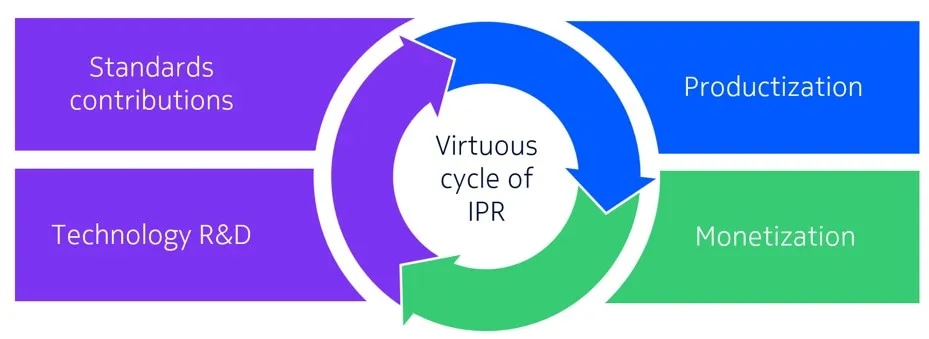
Over time, this cycle helps drive continuous technological progress. It’s one of the reasons standards-based industries such as mobile communications have advanced so quickly across multiple generations.
Nokia’s role in the SEP innovation cycle
For Nokia, this cycle begins with long-term investment in innovation. Since 2000, the company has invested more than €160 billion in R&D, helping drive advances from earlier cellular generations to 5G and the path toward 6G.
By contributing inventions to global standards and licensing its SEPs on FRAND terms, Nokia helps others build on that work while supporting the next wave of innovation.
In the end, standards, patents and licensing are what turn innovation into the products and services people rely on every day.
FAQ about SEPs
What makes a patent “standard essential”?
A patent becomes “standard essential” when it protects technology that must be used to implement a technical standard. In other words, there is no practical way to comply with the standard without using that patented invention.
Which standards involve SEPs?
Many widely adopted technology standards involve SEPs, especially where interoperability is essential—such as mobile communications, Wi-Fi, and certain multimedia standards.
What is a typical SEP licensing negotiation process?
SEP licensing discussions typically begin by identifying the relevant standards, patents, and products involved. From there, the parties work through technical and commercial discussions to agree on licensing terms.