Building digital skills to unlock opportunity for underserved communities
People and Planet impact snapshot

direct beneficiaries reached through Nokia social digitalization projects from 2023-2025
corporate social impact programs launched globally in 2025 under Nokia’s new strategy
projects selected in 2026, building on the best practices and lessons learned from initiatives launched under the new strategy in 2025
More than a quarter of the world’s population did not have internet access in 2025, but even if access to digital connectivity spanned the globe, not everyone would be able to use it successfully. A “usage gap,” or lack of digital skills, is a key factor contributing to the global digital divide. In other words, both connectivity and digital skills — including science, technology, engineering, and mathematics (STEM) and artificial intelligence (AI) education — are needed to build digital equity around the world.
Bridging the digital divide is one of the four strategic priorities of Nokia’s sustainability strategy. We aim to help bridge the digital divide through social digitalization projects, digital skills-building, and connecting the unconnected. Those projects reached 829,953 people between 2023 and 2025 with access to connectivity and digital skills.

Using digital skills and private-sector collaboration to bridge the digital divide
These programs allow Nokia and our partners and customers to learn from practical models for building digital inclusion, rural connectivity and disaster resilience in real-life settings, while advancing education, employment, economic participation and community resilience in underserved communities.
Our growing partnership with UN Women for example – now in its fifth year - aims to advance gender equality and women’s economic empowerment by using digital skills and private-sector collaboration to bridge the digital gender divide. Its primary objectives are to strengthen women’s employability, entrepreneurship and participation in the digital economy, while also increasing women’s participation and leadership in the technology sector. The collaboration began with pilot activities in 2021–2023, including programs in Saudi Arabia, Kenya and South Africa. Following the success of these pilots, Nokia and UN Women extended their partnership, scaling the model across five regions and adapting individual initiatives to local needs.
Now the partnership continues to grow its reach and impact. In 2024–2025, programs across 11 countries covered STEM, entrepreneurship and employment initiatives. One example is the internship program in Saudi Arabia, delivered with UN Women Arab States, where women engineering students completed internships across four cohorts. Of these women, 73% found jobs and nearly half are now working in the technology sector. The partnership also creates strong personal connections through Nokia employee engagement. As one participant told a Nokia volunteer: “We felt forgotten, but I’m so glad you came here.
Expanding digital skills in education
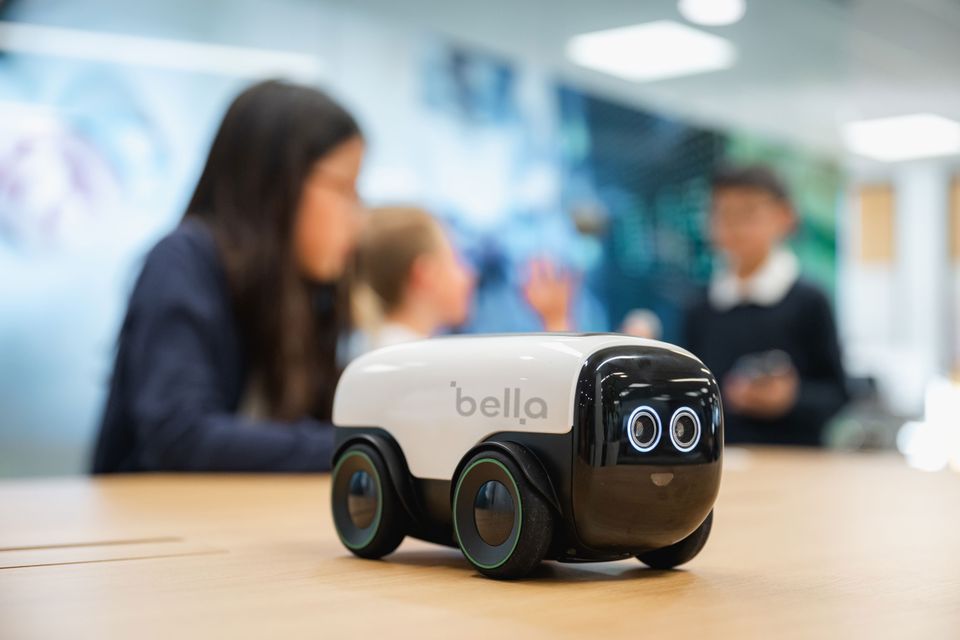
In Finland, sixth graders are learning AI skills through Bella, a learning robot built by the Nokia Bell Labs spinoff IchiZero, through a new partnership with the telecommunications company Elisa and the AI nonprofit Foundation PS. Pupils can create with AI, learning its limits and capabilities in an age-appropriate setting, with no coding required. The program will reach about 19,000 students in its first year.
Similarly, Nokia opened an Innovation Lab at the nonprofit school Christel House Mexico in June 2026 to foster tech skills, critical thinking and innovation among students in Mexico City. Nokia is also working with Save the Children to expand access to digital education in underserved communities across Kenya, including assistive technologies for learners with disabilities, through a new initiative expected to reach more than 3,000 students and over 30 teachers.
In a testament to how deeply digital skills-building stretches through the fabric of societies, the Health AI Academy, a partnership between Nokia and the Asia Regulatory Professionals Association (ARPA), is scaling across Asia to build AI proficiency among healthcare students with the aim of improving care in aging populations.
Nokia also builds the networks on which AI research and education depends. In Brazil, we helped to modernize the backbone of Rede Nacional de Ensino e Pequisa (RNP), the national research and education network, which serves more than 4 million students, professors and researchers.
As we explore how to move beyond a social impact model centered primarily on financial contributions to draw more heavily on Nokia’s people, technology and relationships, we’ve also initiated the planning process for a new impact and business-driven target around digital inclusion, with a base year of 2026. This builds on the nine corporate social impact programs launched globally in 2025 under Nokia’s new strategy and the 14 projects selected in 2026, building on the best practices and lessons learned from initiatives launched under the new strategy in 2025.