How Nokia works with partners to modernize critical systems around the world
People and Planet impact snapshot

reduction in IP and optical infrastructure energy consumption for E.ON compared to current infrastructure thanks to Nokia-enabled upgrades
enterprises and private wireless customers using Nokia solutions
The International Energy Agency projects that global electricity consumption from data centres will more than double by 2030. Meeting that demand will require not only additional generation, but smarter, more resilient and more flexible power grids. This is where Nokia plays an important role: our secure, high-performance communications networks connect control centres, substations and grid-edge environments, giving energy providers the reliable, real-time connectivity needed to monitor and automate operations, integrate more renewable energy and modernise critical infrastructure.

Video
Power Grid Modernization and Automation
Helping grids integrate more renewable energy
That real-time connectivity is particularly important as grids integrate more renewable energy. Because wind and solar generation varies, grid operators need consistent visibility of generation, demand and grid assets to manage operations reliably.
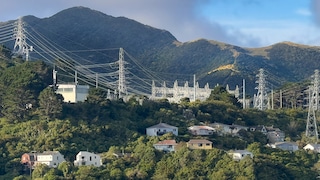
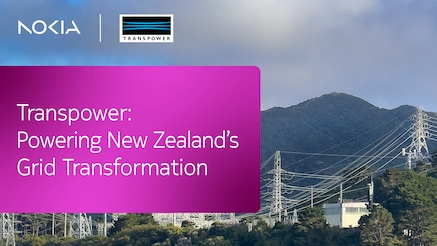
The installation of new solar and wind farms in New Zealand made the national grid owner and operator Transpower realize it needed more network capacity to accommodate increased traffic. Transpower’s fully converged private telecommunications network, called TransGO, enables the company to protect, monitor, and control grid assets and to run the wholesale electricity market in real time. Without it, the grid operator is losing real-time visibility of equipment, generation and load.
To modernize the TransGO private network for a renewable energy future, Transpower moved from legacy SDH and TDM technologies to IP/MPLS and Ethernet-based Nokia equipment. Spark New Zealand, the country’s largest telecommunications provider, partnered with Nokia to provide IP network equipment. The upgrades are scheduled to be complete in 2028 and are based on Spark’s telecommunication services that complement Transpower’s existing fiber and microwave-based connections.
Transpower considers itself the “Kaitiaki” (meaning “guardian” in Māori) of New Zealand’s national grid. The updates will improve TransGO capabilities including grid security and segment routing to enable Transpower to ensure resilience and flexibility in the modern AI age powered by renewables.
Nokia’s partnership with New Zealand’s grid guardians is just one example of how we work with partners to modernize critical infrastructure and improve efficiency and resiliency around the world. In line with our Climate Transition Plan and sustainability strategy, we are continuously exploring new ways to enable our partners and customers to boost efficiency and support mutual achievement of our sustainability goals.
Transpower: Powering New Zealand’s grid transformation

Video
Connecting intelligence for critical infrastructure - the networks behind the networks
E.ON x Nokia
Nokia joined forces with E.ON, one of Europe’s largest energy companies, in 2025 to modernize its mission-critical communications infrastructure. Beginning in Germany, we introduced an optimized, highly automated telecommunications network for distribution system operators that can serve as a model for other E.ON European affiliates.
Our network and market-leading chipsets are helping to enable E.ON to achieve its climate and sustainability targets, with its existing IP and optical infrastructure energy consumption expected to decline by up to 50% compared to its current infrastructure, and grid security and resilience forecast to improve.
Memphis Light, Gas and Water x Nokia
Memphis Light, Gas and Water (MLGW) is the first municipal utility in the United States to implement a full-scale 5G private wireless network for its more than 420,000 customers. In 2025, Nokia deployed our private 5G network solutions for MLGW’s grid modernization initiative, which is intended to enhance power distribution to customers, reduce the risks and impacts of unplanned outages, and enable more efficient service restoration if outages occur.
The new private network will unify and enhance communications across all of the utility’s electric, gas and water services — improving security, data connectivity, resilience and operational efficiency.