Why engineers and scientists must E.A.T.
2016 marks the 50th anniversary of the seminal bringing together of Bell Labs engineers with artists culminating in the “9 Evenings: Theater and Engineering” and that bringing together ultimately led to a movement called Experiments in Arts and Technology (E.A.T.).
50 years later, and in celebration of the 9 Evenings, we (Nokia Bell Labs and our partner organizations) have commenced and re-energized interactions between our researchers and the local creative community near NYC. This has been an eye opening and inspiring learning experience.
We have been shown a new world and new ways of exploring and exploiting the limits of our technology.
Our new creative collaborators have opened up our (often) technologically blinkered views of the world to new possibilities…possibilities on how the limits of technology can be explored and exploited by the creative arts. In fact the Nokia tag line is “The Human Possibilities of Technology” and there is no better way to explore the human possibility of technology than working closely with the creative community.
This is why engineers and scientists MUST E.A.T.
We (engineers and scientists) are typically not creative but we are excellent at solving known problems – problems that are just at or over the horizon. What we are typically not good at is exploring the regions that are not well defined, those regions so murky and unclear that it takes a different mindset to explore and exploit them. Again, this is where deep collaboration with the creative arts can help us all see the world in a different way.
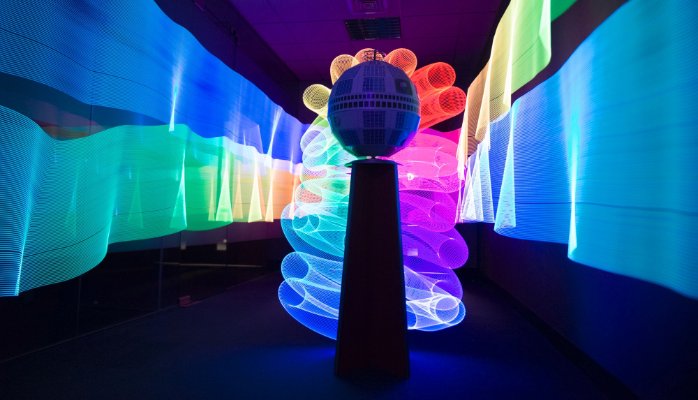
One of the key themes we are exploring at Nokia Bell Labs is to “Make Visible the Invisible”. In particular we are exploring ways to visualize the underlying telecommunications network that goes unnoticed until something breaks. This network is becoming ever more important with the digitization and automation of everything. One such example of this exploration is the picture shown above where we visualize the invisible radio ways that pass through, and around, us. We convert those signals into different colors that represent radio wave signal strength and through long exposure photography we can present those invisible signals in this highly visible and artistic way.