Digital lifelines under pressure: why resilience matters now more than ever
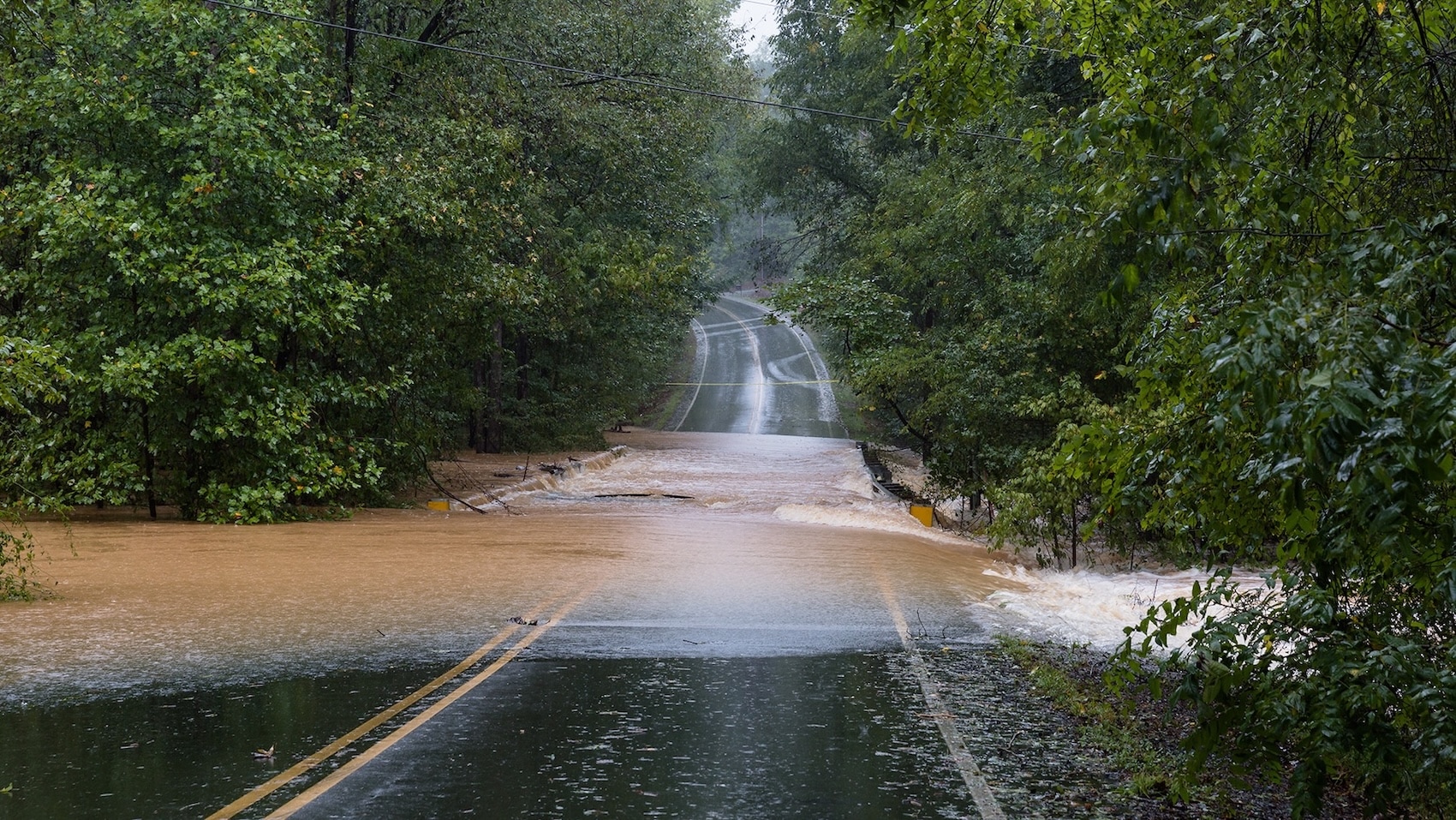
When extreme weather strikes, digital networks quickly become lifelines. They carry emergency communications, support essential services and help societies continue functioning when conditions are at their most challenging. We tend not to notice them when they work — but their importance becomes clear the moment they don’t.
That is why this year’s World Telecommunication and Information Society Day theme, “Digital lifelines – Strengthening resilience in a connected world”, feels especially timely. Climate change is no longer a distant environmental concern. It is a direct and growing operational risk for society and organizations that depend on digital and physical infrastructure.
Extreme weather is testing our connected world
The impacts of climate change are most dramatically felt through extreme weather events such as storms, floods, extreme temperatures and wildfires. These events are increasing in both frequency and severity, placing immediate stress on energy systems, connectivity infrastructure and critical services.
Nokia and CGI is conducting a joint risk assessment on the impact of extreme weather on connectivity infrastructure across the United States and India, using multiple datasets including World Bank projections, EM-DAT disaster data and other primary surveys.
Initial baseline research from the analysis shows that extreme weather events are not only increasing in intensity, but are also becoming more clustered and prolonged — creating compounded stress on infrastructure systems.
In the United States, the research highlights a clear upward trend in extreme storm activity, with peak years recording as many as 23 major storm events, alongside more intense and concentrated rainfall events. In India, it points to increasing flood risk driven by heavier precipitation, with the number of days exceeding 50 mm of rainfall projected to rise significantly — up to seven times higher over the long term compared to shorter-term baselines — alongside rising pre-monsoon heat that is becoming more persistent and severe.
Across both geographies, these trends are further amplified under higher-emission scenarios, reinforcing the fact that extreme weather is evolving from isolated disruptions into systemic stress events for critical infrastructure.
In this context, climate adaptation is the journey. Climate resilience is the end goal — ensuring systems can anticipate, withstand, recover from and adapt to shocks, while continuing to function under environmental, economic and geopolitical uncertainty. Technology plays a decisive role in making this possible.
How Nokia views climate resilience
At Nokia, we see resilience as the ability of critical systems — across connectivity, energy and public services — to continue functioning under extreme environmental stress, as interconnected systems rather than isolated components.
Our approach focuses on three areas:
- Direct control: Strengthening our own operations and technologies.
- Shared control: Enabling customers to build resilience in their networks and services.
- Indirect influence: contributing to resilience together with our ecosystem partners at a broader societal and community level.
Across all three, artificial intelligence (AI) plays a critical enabling role — helping systems anticipate disruptions, adapt in real time and recover more quickly. At the same time, resilience must be built responsibly: energy efficiency, circularity and responsible resource use remain non-negotiable, ensuring that resilience and sustainability advance together.
Enabling resilient digital lifelines
The Nokia–CGI assessment shows that extreme weather impacts connectivity infrastructure in several ways.
Rising temperatures and environmental stress degrade communication equipment performance, while storms and floods directly damage physical assets and disrupt networks. At the same time, dependencies on power grids can turn localized failures into widespread outages, and extreme conditions can delay recovery efforts due to safety and access constraints.
Much of Nokia’s contribution sits in enabling our customers. Our technologies help organizations anticipate, withstand and recover from extreme weather impacts — translating resilience into business continuity, reduced risk and long-term economic value. This includes:
- Next generation mobile networks including satellite-integrated connectivity that complements terrestrial networks, ensuring continuity during disasters and extending coverage to remote and hard-to-reach areas.
- High-capacity Fiber networks enabling stable, low-latency and energy-efficient data transmission across regions.
- AI-native operations and predictive network hardware maintenance, reducing the need for human visits to sites during disasters.
- Resilience for distributed cloud architectures with dynamic traffic steering and workload distribution across regions to maintain service continuity under disruption, including at data centers.
- Automated LTE/5G-connected drone platform providing real-time situational awareness, infrastructure inspection, damage assessment and emergency response for utilities, transport, public safety and industrial operations.
- Environmental sensing through existing fiber infrastructure and situational awareness technologies support better decision-making and faster response during disruption.
- Mission critical and private wireless networks, enabling secure, high reliability communications for public safety agencies, utilities and other critical sectors.
Stability in moments of uncertainty
Ultimately, resilience is not just about infrastructure — it is about people. When networks stay up, emergency calls go through, hospitals remain connected, families can reach each other, and communities can respond and recover faster. The impact of resilient connectivity ripples far beyond technology, helping societies remain stable in moments of uncertainty.
No single company can deliver this alone though. Building true resilience requires strong collaboration across operators, governments, humanitarian organizations and ecosystem partners — working together to ensure solutions reach the places they are needed most. To learn more about our approach to some of these important sustainability topics visit our website.