How high-speed edge demarcation helps network operators scale private line services

In a previous blog, I discussed how wholesale network operators can unlock new revenue opportunities by offering secure, high-performance connectivity to enterprises with data-intensive applications. Since then, continued growth in bandwidth demand has reinforced the importance of both the network edge and of how private line services are delivered, assured and operated, alongside rising expectations for automation and operational consistency.
For many telecommunication providers, modern private line services extend all the way to the network edge. This includes customer premises equipment (CPE) sites where network interface devices (NIDs) connect directly to the customer environment, as well as access sites, such as provider-owned edge or aggregation locations that concentrate traffic from multiple customers. This places greater importance on platforms that support managed, high-speed services at the network edge, including use cases such as colocation connectivity, enterprise point-to-point services and cloud-based applications and storage. The objective is straightforward: deliver predictable performance with strong SLAs to the network edge from day one, while allowing capacity and services to scale over time.
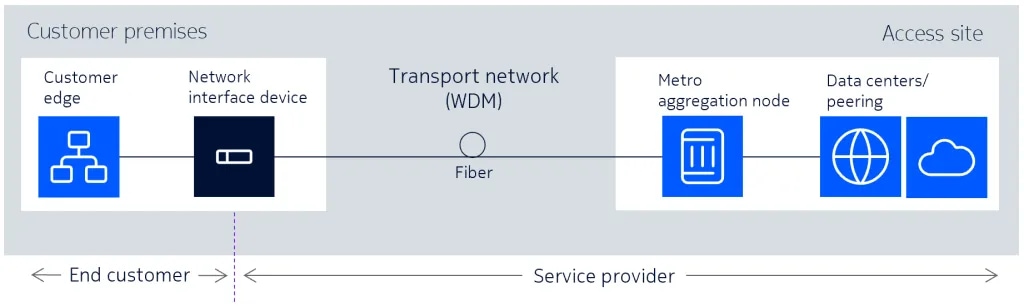
Figure 1: Network edge with NID demarcation.
Heterogeneous aggregation: one edge, many services
Customer premises and access sites often carry more than one service type. The network edge is where multiple services converge, with Ethernet connectivity supporting IP-based applications, OTN-based services enabling wholesale interconnect, Fibre Channel carrying storage replication traffic—including disaster recovery and business continuity—and legacy interfaces that continue to generate revenue and may be challenging to migrate. This heterogeneous mix places new demands on the edge demarcation point, making aggregation a key capability for delivering private line services that are scalable, repeatable and operationally consistent.
Aggregating these heterogeneous services into a unified, high-capacity transport link at the edge simplifies the architecture while preserving service continuity. It enables network operators to modernize incrementally—supporting legacy and emerging services side by side—while presenting a consistent, high-quality service boundary to the metro edge and core network. This approach is particularly valuable for enterprises and wholesale customers that expect predictable behavior, repeatable deployments and a clear upgrade path as requirements evolve.
Efficiency where it matters most
At the network edge, power, space and operational efficiency take on greater significance due to the scale of deployment. When customer locations are deployed at scale, footprint, power draw and installation complexity quickly translate into operational cost. Compact demarcation platforms reduce watts per gigabit and simplify deployment, making small form-factor designs—often 1RU or NID-style—a natural fit for customer premises, street cabinets, colocation racks and edge data centers.
To support the wide variety of network edge deployment environments, network operators increasingly look for platforms that offer both AC and DC power options and extended temperature operation. These capabilities enable reliable deployment in unconditioned cabinets as well as traditional indoor facilities, broadening the range of use cases that can be served from a common edge platform.
Security, assurance and automation at the service boundary
For private line services, the demarcation point defines more than a physical handoff; it establishes the trust boundary and the SLA enforcement point. Applying security and assurance at this boundary simplifies operations and improves service credibility.
When encryption and performance monitoring are provided at the edge, all aggregated services benefit from the same protection and visibility. This strengthens SLA confidence, reduces disputes and enables telecommunication providers to offer higher-value service tiers without adding architectural complexity.
Network automation, with capabilities such as zero-touch provisioning, further strengthens the edge as a service foundation by enabling faster service turnup, more consistent delivery and lower operational overhead. Telecommunication providers seeking to monetize endpoint services for their end subscribers can also use network automation to enable automated service fulfillment through tenant- and service-level abstraction. This provides tenant-level SLA assurance at each endpoint location—such as availability, latency, and utilization—while supporting premium service offerings, including enhanced security and low-latency connectivity. This, combined with approaches such as quantum-safe optical networking, supports efficient, on-demand connectivity for reliable, high-performance and secure end-to-end services.
An edge that fits into an end-to-end metro solution
The Nokia 1830 Photonic Service Demarcation (PSD) family delivers reliable, multiservice, high-performance connectivity to customer premises and access sites. The new 1830 PSD-200 expands the PSD family with a compact 1RU platform purpose-built for high-capacity service demarcation and aggregation.
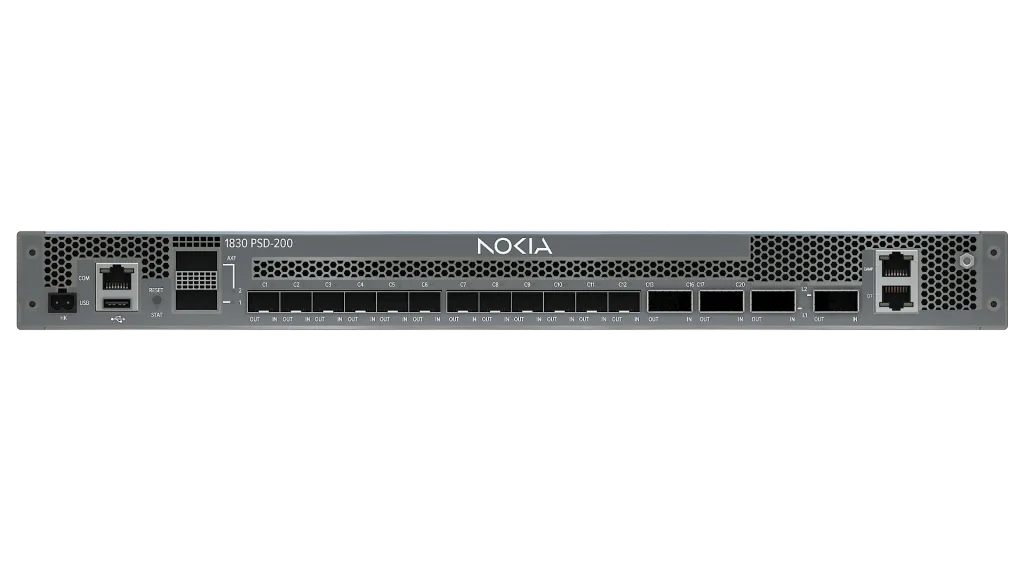
Figure 2: 1830 PSD-200.
The 1830 PSD-200 delivers 200G of switching capacity in a single rack unit, supporting a wide mix of Ethernet, OTN, Fibre Channel, and TDM client services with optional AES-256 lineside encryption for secure connectivity. With low power consumption, an extended temperature range, and optional auxiliary QSFP-DD ports for amplification or OTDR-based fiber monitoring, the PSD-200 is optimized for enterprise, wholesale and telecommunication provider edge deployments. The platform delivers high reliability and operational simplicity through dual redundant AC/DC power and fans, rich OAM, zero-touch provisioning, and seamless integration with the Nokia 1830 PSS portfolio.
These network edge capabilities fit within a broader metro-optimized service path. As traffic scales beyond the demarcation point, platforms such as the 1830 PSS family—including compact multiservice systems like the 1830 PSS-4II and 1830 PSS-8—and the 1830 PSS-X family of OTN switches, including the metro aggregation 1830 PSS-8x, provide the next stage of aggregation and transport. Together, they create a seamless, end-to-end optical architecture with aligned capabilities, management, and SLA assurance across edge, aggregation and metro transport layers.
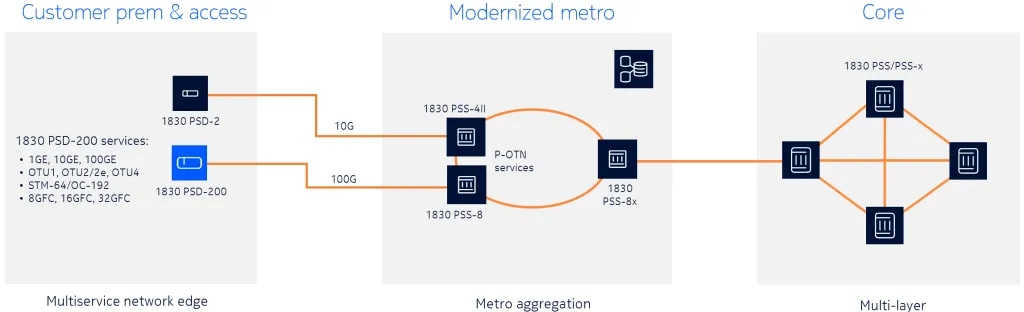
Figure 3: Metro-optimized service path from the network edge to the core.
Let’s wrap it up: private line services start at the network edge
As enterprise and wholesale connectivity continues to evolve and scale at the network edge, private line services are increasingly shaped by high-speed demarcation, heterogeneous aggregation, security, assurance and automation at the service boundary. The new 1830 PSD-200 is a compact demarcation platform that delivers high-capacity connectivity and aggregates multiple lower-rate services, helping network operators eliminate edge bottlenecks, simplify architectures and scale capacity exactly when—and where—their customers need it.