Technical Advisory Board
An outside-in industry perspective on technology evolution

Shaping the future of connectivity/network evolution: Nokia’s new Technical Advisory Board
Technology is accelerating at an unprecedented pace, fundamentally redefining how networks are built, operated, experienced and even sensed. To not just keep up, but to lead this transformation, we've established a powerful Technical Advisory Board. This elite group of experts provide critical, independent insight, rigorously challenges our thinking, and actively forges our long-term technology strategy and architecture.
How it works
The Technical Advisory Board brings an outside-in industry perspective, acting as a sounding board to test Nokia’s technology vision and strategic direction. It helps assess technology opportunities, talent, and market positioning, while identifying and validating breakthrough ideas driven by our research and scientific advancements.
Internally, the Board mentors and advises key talent, shaping capability development across the technology organization. Its experts work closely with our teams to provide independent insight into emerging technologies and their business impact, supporting our digital transformation and enterprise architecture evolution.
Why this matters
For our customers
This means continued investment in networks that are more resilient, secure, and intelligently managed - ready to support the growing demands of AI-driven services, automation, and real-time connectivity.
For our partners
It strengthens how we collaborate and innovate together. By combining independent expertise with advances in AI and data-driven insights, we are building a more open, adaptive ecosystem that accelerates the development and deployment of next-generation technologies.
For our employees
It creates greater opportunities to learn, grow, and work at the cutting edge of technology. Access to external expertise and insight helps deepen technical capability across Nokia, while fostering a culture that embraces innovation and continuous learning.
For the industry
It reinforces our commitment to leadership at a pivotal moment of industry transformation. The Technical Advisory Board helps guide how AI is applied across telecom infrastructure - informing standards, shaping policy discussions, and ensuring innovation is both responsible and grounded in operational reality.
Members
Our Technical Advisory Board is founded by our Chief Technology and AI Officer, Pallavi Mahajan, and two highly respected leaders, Nick McKeown and Raj Yavatkar, with deep expertise across technology, infrastructure, and innovation.

Pallavi Mahajan is a globally recognised technology and business leader shaping the convergence of AI, advanced computing and intelligent networking. She has spent her career at the front edge of disruption, riding the waves that reshaped industries. From architecting networks that connected the early Internet to building high-performance computing and edge cloud platforms to bringing AI across the computing spectrum, Pallavi has consistently turned breakthroughs into industry-defining shifts.
A disruptor and innovator at heart, Pallavi has a sharp instinct for what’s next – and how to turn it into reality.
Today, as Chief Technology and AI Officer at Nokia, Pallavi is responsible for the organization’s technology and platform strategy, shaping Nokia’s roadmap and Nokia’s portfolio. In this role, she is focused on pushing the boundaries of AI and emerging technologies. She is driving the shift to AI-native networks – networks that not only connect intelligence but also become smarter through it – working in close collaboration with the broader technology ecosystem.
A named inventor on multiple US patents, Pallavi brings a global perspective shaped by leadership roles across Asia, Europe, and North America. As CVP & GM for Datacenter & AI at Intel, Pallavi spearheaded the global strategy and execution for AI accelerators, AI datacenter innovation and open software ecosystems. Previously, as CVP & GM of Intel’s Network and Edge Group, she drove the end-to-end business transformation for the edge and networking software portfolio, from strategy to market entry – incubating a new software business and establishing a P&L.
Earlier, as VP of Engineering for the High-Performance Computing (HPC) & AI business at HPE, Pallavi scaled the Cray acquisition to exascale – delivering the Frontier for Oak Ridge National Laboratory and transforming HPE’s HPC business.
Prior to HPE, she spent 16 years at Juniper Networks, where she pioneered the vision of self-driving autonomous networks, set new standards for programmability, and led software monetization and SaaS delivery strategies.
Pallavi holds a Bachelor of Technology degree in Computer Science from the National Institute of Technology Kurukshetra, as well as a Master’s degree in Science in Software Systems from Birla Institute of Technology and Science, Pilani. She also completed the Advanced Leadership Program at Stanford University Graduate School of Business.

Nick McKeown is an award-winning scientist, an emeritus professor at Stanford University in Electrical Engineering and Computer Science, and a visiting professor at Oxford University. Nick was also appointed to the UK Prime Minister’s Council for Science and Technology in February 2025, where he advises the government on high-level science and technology priorities, particularly focusing on AI chip design, semiconductor strategy, and photonics to boost UK innovation.
He is widely regarded as one of the most influential figures in modern computer networking, especially in Internet architecture, high-performance switching, and software-defined networking (SDN).
Nick’s early work includes his research efforts at Hewlett-Packard Labs in the late 1980s in the United Kingdom. In the United States, he helped architect Cisco’s GSR 12000 router, a major commercial backbone router. This early phase shaped his lifelong focus on how to make networks faster, scalable, and programmable.
Over the years, Nick’s research group The McKeown Group has focused on overcoming barriers to network innovation by creating platforms for experimentation, demonstrating new ideas on top of these platforms, and opening these platforms to the world. This includes Internet router designs, crossbar scheduling algorithms for switched backplanes, lookup algorithms and novel memories. The core philosophy underpinning Nick’s research argues that networks should be flexible, programmable systems, not rigid hardware pipelines.
In 2025, Nick was awarded the Marconi Prize in recognition for his fundamental contributions to high-performance switches and routers and to SDN and for transferring these contributions into widespread practice. He co-invented SDN through the Ethane project and OpenFlow protocol with Martin Casado and Scott Shenker, introduced the idea of programmable forwarding planes, and challenged traditional network architecture. This fundamentally changed networking, from hardware-driven to software-controlled infrastructure.
Nick’s influence extends to designing open-source platforms like NetFPGA and the P4 programming language, empowering researchers and developers around the world.
An entrepreneur, he repeatedly turned academic ideas into industry-defining products. Nick has started technology companies in Silicon Valley, including Nicira Networks, alongside Casado and Shenker, a California-based company working on network virtualization, subsequently acquired by VMWare for $1.26 billion in July 2012.
As of 2026, Nick’s research team is working on AI fabrics and low-cost underwater vehicles for oceanographic research.
Nick earned a master's degree in 1992 and PhD in 1995 both from the University of California at Berkeley.
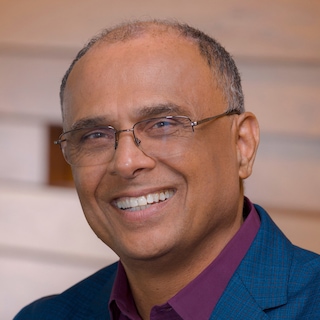
Raj Yavatkar is a technology executive and innovator who throughout his career has envisioned how emerging technologies can be applied to creatively solve enterprise and business problems, and help establish market-defining products.
He led the creation of major infrastructure platforms at Intel, VMware, Google, and Juniper Networks. His work spans networking, cloud infrastructure, virtualization, GPU software, and systems-on-chip.
As CTO at Juniper Networks, Raj was responsible for charting Juniper's technology strategy. He led and executed the company’s critical innovations and products for intelligent self-driving networks, security, Mobile Edge Cloud, network virtualization, packet-optical integration, and hybrid cloud. He is also led the company’s AI transformation, architecting solutions that span enterprise Generative AI adoption to AI-optimized network infrastructure, and has incubated new products in RAN and multi-cloud networking.
During his tenure as an Intel Fellow, Raj spearheaded several transformative product initiatives across networking, virtualization, and SoC architecture. He is credited with creating the programmable network processor – a category now widely recognized as SmartNICs – and inventing the Active Manageability Technology that served as the foundation for the Intel vPro platform.
At VMware, Raj introduced a new direction for hybrid clouds and then developed VMware Cloud Foundation - a hybrid cloud automation platform that integrated compute, storage, and network virtualization with automated lifecycle management, growing from inception to a $1 billion+ annual software business.
At Google Cloud, he led engineering for key network virtualization and cloud networking platforms.
Raj is an IEEE Fellow, has a Ph.D. in Computer Science from Purdue University, a prestigious institution known for its rigorous academic programs and research excellence, and holds 80+ patents. He has co-authored five Internet standards and has published more than 60 papers in academic journals and conferences, coauthoring the book, Inside the Internet’s Resource Reservation Protocol (RSVP) published by John Wiley.
Pioneering what's next