Materiality is the next frontier of immersion
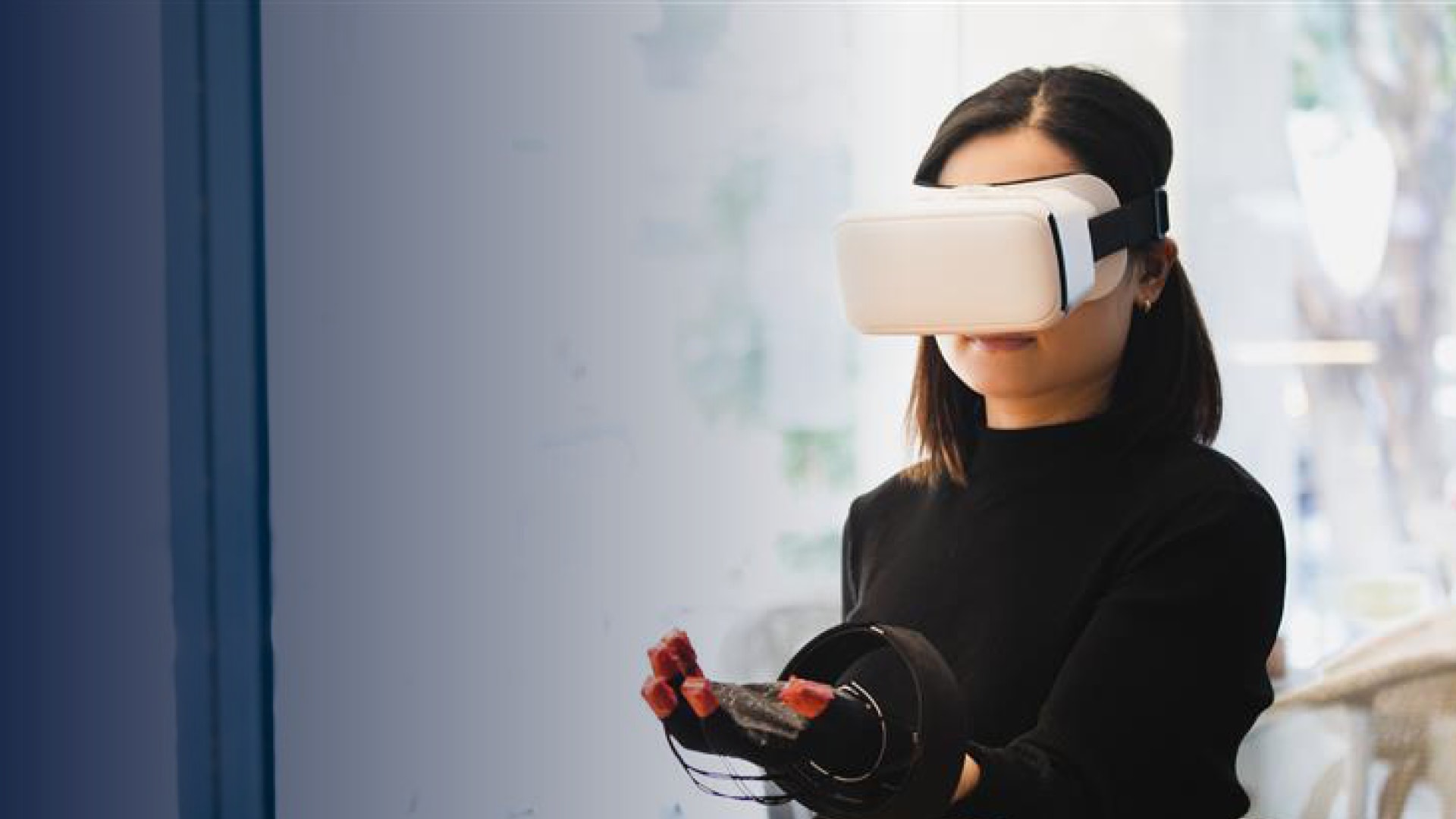
As Margaret Atwood once wrote, "touch comes before sight, before speech. It is the first language and the last, and it always tells the truth."
Despite touch being so fundamental to how we understand reality, in our digital worlds we have yet to fully bridge the sensory gap. For years, technology has prioritised visual and auditory fidelity: sight has been deceived by a clever pixel and sound mimicked by a speaker. Touch, however, has often remained irretrievable by the laws of physics.
At Nokia, we believe that for Extended Reality (XR) to be truly immersive, it must feel tangible. And over recent years, we have taken great strides in achieving this. Our latest research into thermal haptics closed the gap further, moving beyond replicating “hot and cold" to restoring touch as the ultimate arbiter of what is real.
This evolution to "materiality" - which we define as the digital recreation of an object's physical properties, such as texture and thermal conductivity - is the focus of our latest paper, soon to be presented at ACM CHI 2026 in Barcelona. By shifting our focus toward physics-based thermal conductivity, we asked users to distinguish between the way in which various materials exchanged heat with the skin.
The wisdom of the hand
To conduct our study, we gave 38 participants Meta Quest 3 headsets and WEART TouchDIVER Pro gloves. What we found underscored a growing truth about human perception. Even when we intentionally misled users, such as by showing them a "wooden" block that thermally behaved like "metal", their tactile sense remained stubbornly anchored in physics. This proved that the skin's sensitivity to transient thermal gradients – i.e. the rapid exchange of heat - provides a layer of material certainty that sight alone cannot contradict.
Participants consistently rated the materials (metal, glass and wood) based on their conductivity properties, regardless of the visual disguise. While the eye was tricked, skin proved perceptive, confirming that conductivity-based rendering is a perceptually reliable way to communicate material truth in immersive environments.
What this means for the future of XR
The implications for the future of XR and spatial computing are numerous. However, bringing materiality to the masses requires global cooperation. We are actively driving this through our leadership in MPEG-I haptics standardisation.
Our goal is to ensure that these multi-sensory experiences are interoperable and scalable across the entire volumetric media ecosystem. Whether that’s a digital twin used for remote industrial repair or to deliver immersive training programmes, the thermal feel of an object must become as recognisable as its colour or sound. In doing so, this will provide the brain with the ‘biological receipt’ it needs to believe the digital experience is authentic.
As we prepare to share our findings at ACM CHI 2026, through both a talk and an interactive demo, we are reminded once again that technology is at its very best when it disappears, leaving only the experience behind. We have taken another step away from the sterile glass of the past, and building digital worlds that don’t just look real, but feel truly immersive.