

Optical networks
Powering scalable, intelligent optical connectivity

How is Nokia leading optical networks for the AI era?
The Nokia optical network portfolio leverages highly vertically integrated coherent optical engines to build an advanced-connectivity foundation for the AI supercycle. This portfolio includes open modular transport platforms, intelligent pluggables, the latest generation of open and flexible optical line systems, ultra power-efficient intra-data center optics, AI-powered network automation and control, and quantum-safe assurance.
Our optical network innovations and technologies deliver greater scale, simplify networks and provide robust security. These solutions will help telecommunication providers and enterprises scale faster, compete in the AI era and unlock new growth opportunities.
Scale efficiently
Leverage our suite of carrier-grade modular platforms to support a wide range of services and traffic management features, coupled with the latest generation of efficient, high-capacity coherent optical engines.
Simplify operations
Reduce operational complexity and accelerate service activation and troubleshooting with full-featured, standards-based, multi-domain, AI-powered network automation.
Secure your network
Achieve the highest level of network security by taking advantage of the latest technologies, including data-path encryption and quantum key distribution.

Scalable, agile data center connectivity built for AI
A highly compact, optical networking solution for data center interconnect (DCI) to enable power-efficient, high-bandwidth, low-latency and secure data transmission.
Introducing the thin transponder layer
Get the best of both worlds with compact, power-efficient sleds integrating coherent pluggable optics with cost-effective transponder functionality.
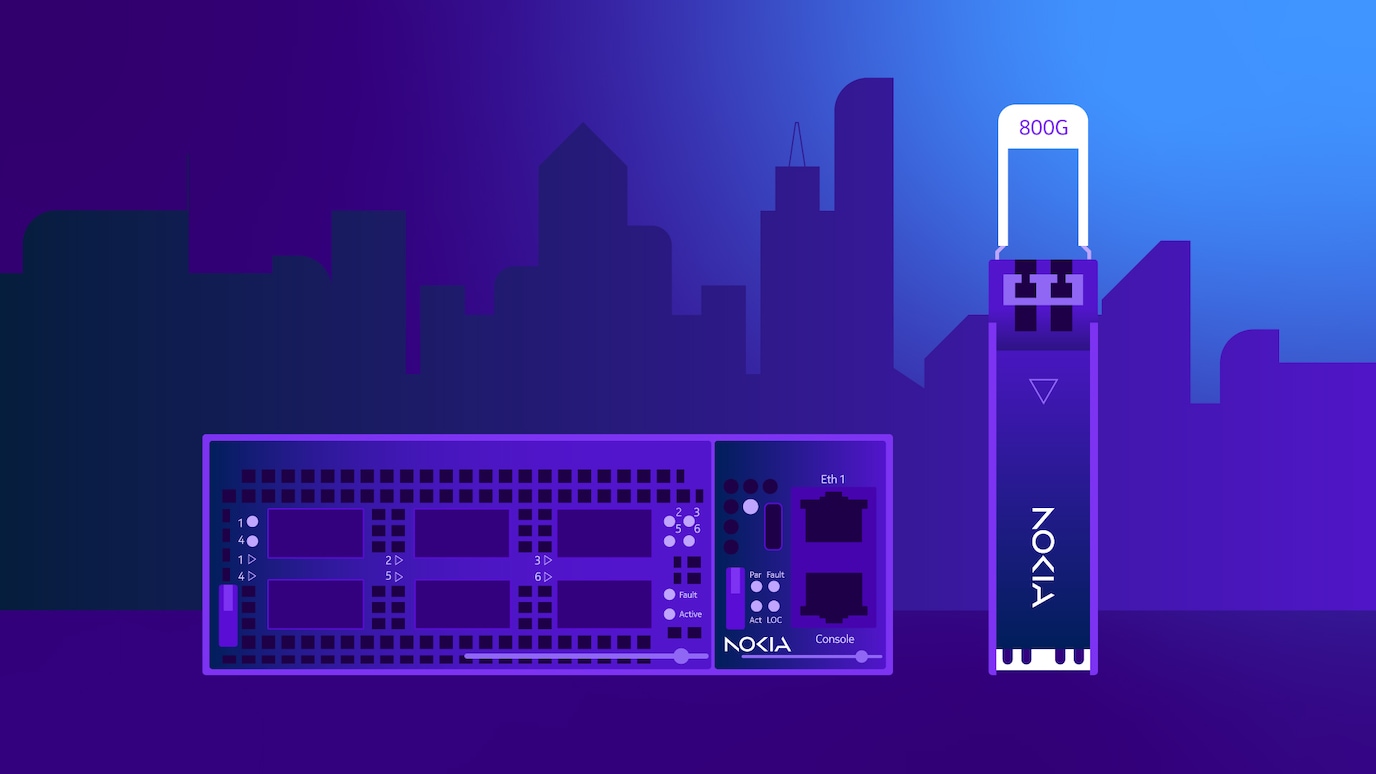

Lighting the path to intra-data center connectivity
Nokia ICE-D intra-data center optical connectivity technology provides a power-efficient (up to a 75% reduction), highly integrated solution that combines multiple optical functions onto a single monolithic semiconductor chip.
Why Nokia as my networking partner?
At Nokia, we combine deep innovation with global scale to help you build and operate optical networks with confidence. Our vertically integrated Indium phosphide fab, together with advanced in-house testing and packaging, gives you greater assurance of performance, quality and supply continuity. With our material science expertise, we continuously push innovation forward while strengthening the resilience of our products, so you can deploy faster and scale reliably.
The result is greater control over innovation and supply, reducing risk in a rapidly evolving market. Backed by our global presence and local support wherever you operate, and supported by a distributed delivery infrastructure, Nokia enables you to deploy and scale optical solutions globally with confidence.
Customer success stories




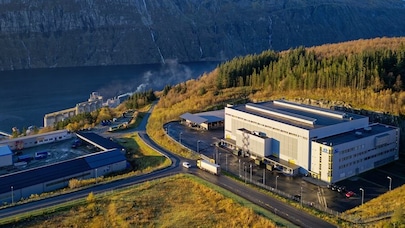




Empowering sustainable growth - Illwerke vkw AG and Nokia transform the Power of Networks





Proximus: A legacy of proven innovation, now forging the quantum-safe future




Frequently asked questions
An optical transport network is a high-speed communication system that sends light signals over fiber-optic cables to move large amounts of data across long distances. Optical transport networks are designed to be scalable and secure. Applications include telecommunications networks, data center interconnection and enterprise connectivity.
Fiber-optic data transmission sends data as light through thin glass or plastic fibers. Multiple wavelengths can be multiplexed onto a single fiber enabling the delivery of up to 100 Tb/s in the case of leading dense wave division multiplexing (DWDM) networks.
Start by identifying your capacity demands, application and anticipated future growth. Identify solutions that are designed for your application like metro, long-haul, DCI or subsea. Look for open standards, flexible deployment options and automated operations. Finally, find a vendor partner with the ongoing innovation, investment and professional resources to meet your needs today and well into the future.
Wavelength division multiplexing is an optical networking technology designed to enable transmitting a greater amount of information over a single pair of fiber cables. WDM uses lasers that can transmit information on a single frequency (or color) of light and then combines multiple signals of different frequencies onto a single fiber cable. With dense wave division multiplexing (DWDM), as many as 100 optical signals can be combined onto a single fiber.
Learn more about optical networks

Blog

Blog

Blog

Blog
Blog
Blog

Blog

Blog