Biodiversity
Biodiversity can be defined as the variety of animals, plants, fungi, and even micro-organisms such as bacteria that make up our natural world in a particular area. Biodiversity can be considered material for every company and individual as it provides everything in nature that we need to survive food, clean water, medicine, and even shelter.
Although biodiversity is of increasing importance for our stakeholders, at Nokia we also look more broadly at our dependence on natural resources, including climate, biodiversity, and geological diversity (geodiversity). By geodiversity, we mean the earth's minerals, rocks, fossils, soils, sediments, landforms, topography and hydrological features such as rivers and lakes.
While the ICT industry is not considered to be one of the high-impacting sectors related to biodiversity, the story may be different for geodiversity. From a geodiversity perspective, the production of ICT hardware requires various metals, minerals, plastics, chemicals, energy and water in a multi-tier supply chain.
Beyond our science-based climate targets, we have now started to work to understand the impacts affecting natural capital (including biodiversity and geodiversity) across our value chain. These areas include mining raw materials and component production, final assembly production, logistics and fleet, installation and use, maintenance of sold products, and product end-of-life activities. To find out more, read Nokia's position paper on biodiversity and geodiversity.
Biodiversity in action
Nokia is integrating biodiversity considerations into its product design, supply chain, and operational strategies, underpinned by a commitment to achieve Net Zero by 2040.
Our Approach to Biodiversity
At Nokia, we recognize the critical link between our operations and the health of global ecosystems. Our environmental strategy focuses on understanding and mitigating our environmental footprint across the product lifecycle. We are dedicated to designing products and working with our suppliers to reduce emissions and minimize environmental impact.
Life Cycle Assessment (LCA) Insights
Our LCA Insights reveal critical areas for environmental focus. We conduct LCA for a typical 5G radio unit with Sphera, to evaluate impacts beyond climate, including the main drivers for biodiversity. A key finding demonstrated that for land use a major hotspot was the use of wood-based materials like pallets and cartons, accounting for up to 50% of the embodied manufacturing land-use impact. This insight has directly guided us to set a new packaging targets for 2030: We aim for all product packaging to be 100% recyclable, for cardboard and plastic packaging materials to contain at least 50% recycled content, and for plastic packaging materials to be limited to no more than 10% by weight of total primary packaging.
Net Zero Target and Biodiversity
Nokia's commitment to climate action is intrinsically linked to biodiversity protection. We have set an ambitious Net Zero target for 2040, recognizing that climate change is a significant driver of biodiversity loss. Achieving Net Zero by decarbonizing our operations and value chain will directly contribute to mitigating climate change, thereby reducing a major threat to global biodiversity. Data and digitalization are crucial tools in this endeavor.
University cooperation
We have co-funded a tenure-track professorship at the University of Jyväskylä to improve biodiversity footprint assessments in companies. This activity is an important step on a broader longstanding commitment to combating climate change and minimizing environmental impacts.
UN Global Compact SBTN working group
We are part of the UN Global Compact Finland SBTN working group. Together with Ramboll Finland, the UN Global Compact developed the Science Based Targets for Nature (SBTN) program. This training involves 15 Finnish companies from different areas. It is the first program of its kind by UN Global Compact. It started in 2023 and finished spring 2024.
Nature protection
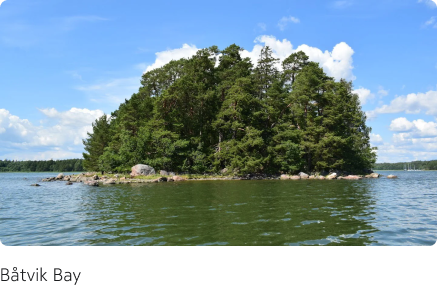
Nokia has a number of nature conservation areas on both land and sea. In 2025, we expanded our protected area to 273 hectares. This total includes 162 hectares of forested areas, 11 islands, and 111 hectares of marine environments. These protected sites are located across Finland, specifically in Siuntio and Båtvik bay in the south, and in Kuusamo, the Kitka river region in the north. These areas contain a mix of different plants and animals contributing to a rich biodiverse habitat.
The Ocean Cleanup
In early 2023 we announced that we will deploy private wireless connectivity, network edge equipment and analytics for The Ocean Cleanup, the international non-profit project working to develop and scale technologies to rid the world’s oceans of plastic.
5G, private wireless, edge compute, sensors, AI-based analytics, drones and other advanced technologies will play an increasingly critical role in supporting the conservation and sustainability of our natural environment by providing immediate up-to-date and constant information on the status of the environment, whether on land or in the sea. Working with The Ocean Cleanup provides the opportunity to explore that role further.
John Nurminen Foundation
In late 2022, we confirmed an exciting partnership with the John Nurminen Foundation to protect biodiversity in the Baltic Sea. A three-year joint effort is meant to combat eutrophication in the Baltic Sea and the associated risk to biodiversity. Nokia’s critical role is to support the conservation and sustainability of natural habitats by providing immediate up-to-date and constant information on the status of the environment whether on land or in the sea through our advanced technologies.