

Core on multi-cloud
Create profitable opportunities with a broader ecosystem

Telecommunication providers are deploying our automated, cloud-native 5G Core and IMS Voice Core on the multi-cloud of their choice. They improve their competitiveness with rapid scaling for resiliency, their preferred platform’s security, and edge cloud agility for the AI supercycle.
Deploying on multi-cloud opens broader ecosystem innovation, enables optimized traffic configuration, and delivers on-demand responsiveness.
Key partnerships include AI and Cloud Providers. Listen to senior leaders explore what it means for telcos in these three videos:
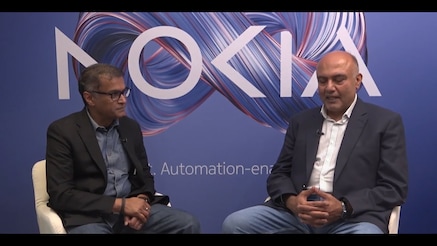
Nokia Core Talk: Nokia & AWS collaboration produces simplicity, consistency & automation

Nokia & Google: Why Generative AI is the Key to Autonomous Networks

Nokia and Microsoft: the best of telco and cloud
Our customers’ multi-cloud deployments
Telecommunication providers deploy our cloud native 5G core and IMS voice core onto private, public and hybrid clouds. Dive into our customers’ case studies:
- Boost Mobile USA. Read the case study for the world’s first telecommunication provider to launch live service of a 5G Standalone Core on a public cloud with AWS. Next, Boost Mobile wholly deployed their IMS Voice Core on AWS, estimating a 70% network infrastructure cost reduction.
- Citymesh Belgium launched the world’s first commercial mobile service running on 5G Core as a Service (Core SaaS). Read the blog and watch the video to learn how Citymesh, AWS and Nokia are delivering new services to Belgium enterprises.
- Comcast USA . Comcast migrated their live service of the 5G Standalone Core from a private cloud to AWS.
- Deutsche Telekom Germany and their Horizontal TelCo Cloud (HTC) marks a shift to a disaggregated, horizontal cloud platform for live service of subscriber data management, IMS voice core, and more. Read the case study's paper, watch the panel video, or listen to a short interview to learn all about the HTC’s background, architecture, automation, benefits, and next steps.
- Rakuten Japan. Live service of cloud-native IMS, subscriber data management, signaling, mediation and security are operating seamlessly alongside Rakuten’s other workloads on Rakuten Cloud.
- Telefónica Germany. Read the case study for the first live service in Europe involving a 5G Standalone Core in a public cloud, fully integrated with the operator's network. Furthermore, Telefónica Germany is also deploying 5G Standalone Core network functions on Google Cloud. Next, Telefonica is moving production-scale network functions to AWS Outposts in its own premises.
- Telenet Belgium with Google Anthos. Telenet’s live service enables it to develop its own telco cloud infrastructure with much less complexity.
- Tune Talk Malaysia. First live service in Malaysia for a 5G Standalone Core in a public cloud. Tune Talk achieves low-latency and cost-savings by deploying the core’s user-plane on AWS Outposts, on Tune Talk’s own premises. Watch the video with Tune Talk, AWS, and Nokia as they share their innovation journey.
DT’s Horizontal Telco Cloud
A new industry blueprint for telco cloud infrastructure
What is multi-cloud?
Our solution enables telecommunication providers to choose the cloud deployment models that best fits their needs. This includes:
- Private cloud (on-premises): The telecommunication provider owns and operates the network and the cloud infrastructure.
- Public cloud: The telecommunication provider owns and operates the network, which is deployed on a cloud infrastructure that is owned and operated by a public cloud provider. Optionally, the cloud provider supplies automation, analytics, and edge cloud locations.
- Hybrid cloud: A blending of private and public clouds. For example, user-plane functions are deployed in a private edge cloud, while the control-plane functions are deployed in a public cloud. Or an instance of the public cloud infrastructure is deployed on the telco’s premises, thereby shifting spending on compute and data bandwidth.
Our core’s cloud-native software is commercially deployed on multi-cloud, across private, public and hybrid clouds. It gives you all the freedom and flexibility your business demands. This lets you choose the vendors you want for the services you need.
What are the benefits for using multi-cloud?
Telecommunication providers' business imperatives are solved by deploying their networks across multi-cloud:
- Partner with AI and Cloud Providers while pursuing AI-driven services for the AI supercycle.
- Stronger competitiveness driven by faster service launches, flexible scaling and extreme automation.
- Increase profits by pursuing the new mission critical market with more edge cloud locations, larger ecosystems and new methods including SaaS & APIs.
- Reduce costs by taking advantage of flexible workload placement, traffic grooming, and on-demand responsiveness.
How to manage multi-cloud?
Deploying the 5G Core across multiple clouds requires two key capabilities:
- Design for highly complex lifecycle management. Automate it to work efficiently across the various cloud platforms. Use multi-cloud manageability to ensure you achieve operational simplification and corresponding service agility.
- Build a service intent driven network. Orchestrate network slicing & agile vertical services for massive scaling & critical communications. Close the loop between traditionally separate service orchestration & service assurance, for efficient and effective management of the full service lifecycle.
Learn more about 5G core on public cloud and hybrid cloud

Video
Nokia Core Talk: Agility and Efficiency in Multi-Cloud Telecom Networks
Video
Nokia Core Talk: 5G Standalone Core on Cloud, insights with Telefónica Germany

Customer success

Video
Nokia Core Talk: How did they do it? DISH, Nokia and the world’s first 5G on AWS’s cloud

Video
Nokia Core TV series #10: Nokia 5G Core deployed on Google Anthos
Video
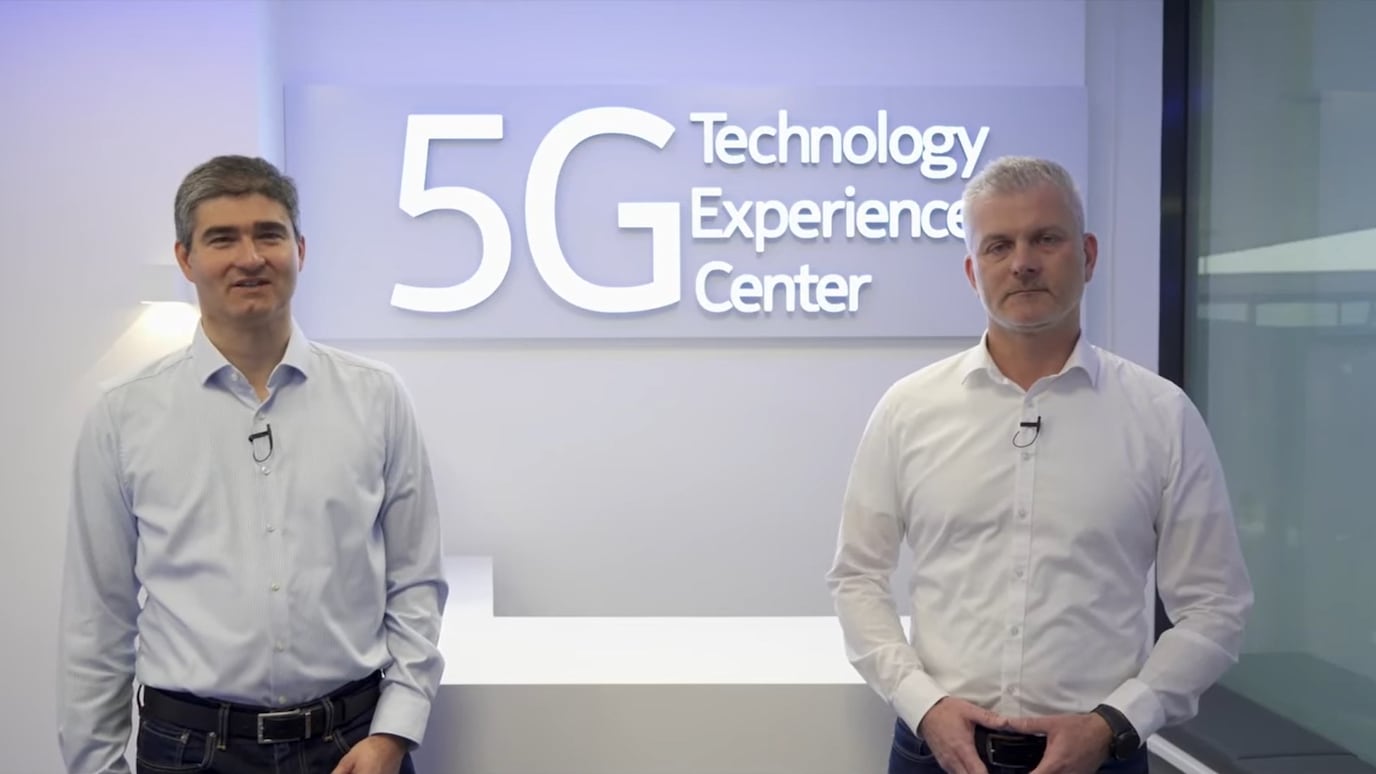
Nokia Core TV series #8: Nokia 5G Core automated deployment on any cloud

Case study

Webinar
Please complete the form below.
The form is loading, please wait...
Thank you. We have received your inquiry. Please continue browsing.