

Our approach to
corporate social responsibility

Between 2022-2025 Nokia reached 829,953 direct beneficiaries from its social programs.
In 2025, Nokia invested about EUR 4.4 million in communities around the world.
Supporting informed public policies for digitalization and sustainable development
We believe that connectivity and digitalization can have a key role to play as an enabler, unlocking economic opportunity and growth and facilitating access to work, education, healthcare and other public services. This belief motivates our support for policies that encourage broadband rollout and adoption and the digital transformation of society and industry. At Nokia, we collaborate with governments, regulators, international organizations, trade associations, industry peers and academia to inform effective policy making and support the development of the best policy framework for sustainable and inclusive digitalization.
Nokia engages with policymakers and regulators transparently and constructively. We offer our expertise on trusted and reliable international connectivity, on the security of digital infrastructures, on a regulatory regime that facilitates network rollout and other digital policy endeavors, on best policy frameworks unlocking innovation, on improving the resilience of economies and their critical infrastructure (e.g. energy grids) and on the most effective regulations for sustainability (e.g. forced labor regulation or due diligence in supply chains). Nokia’s experts explain roadmaps toward 6G in several parts of the world. We advise on spectrum for broadband, including through our participation in the World Radiocommunication Conference 2023 in Dubai.
Our guidelines for dealing with government officials always apply, regardless of the employee’s role and the purpose or frequency of interaction. They also apply to interactions with employees of state-owned companies and other governmental customers. The basic guidance for interaction with a government official is laid down in our Code of Conduct. We do not participate in the political or electoral process through direct donations to political groups.
Our approach to corporate social responsibility
Our Corporate Social Responsibility activities are divided into regional and local programs. In 2024, we focused on three key themes: Increasing digital inclusion: Connectivity, Access, Enablement; Disaster Resilience/ Response; and University donations.
- Increasing digital inclusion,
- Climate and environment,
- Inclusion, equality and diversity,
- Disaster relief.
Key regional programs cover programs in India and China, and local community programs are initiated and run by Nokia offices around the world.
In 2025, Nokia invested about EUR 4.4 million in communities around the world. We kicked-off 9 new corporate social impact programs globally under the newly established strategy and partnered with organizations such as Save the Children, Christel House, Al Khidmat Foundation, Inyaz Egypt and Kumpul Impact just to name a few . During the year we also continued our work with UN Women empowering women through technology and skills in nine selected social initiatives across four different Nokia markets.
Smartpur, Nokia’s long-term community investment program, is a digital village ecosystem that offers technology-enabled services in rural India. The program leverages Nokia’s technology, expertise, and funding to drive social digitalization projects and is contributing to Nokia’s goal to bridge the digital divide and promote inclusive growth. In 2025, over 1 million service interactions were facilitated through Smartpur Centers, reflecting the program’s continued contribution to community development and digital empowerment.
In addition, during the year the Nokia Corporate University Donations program initiated 13 new projects in collaboration with selected universities and academia to fund research into open, long-term, high-impact and disruptive discoveries solving sustainability challenges with 6G, AI, sensing and quantum technologies.
In 2024 Nokia also expanded its collaboration with UN Women, empowering women through technology and skills in five regions. In addition, Nokia University Donations program collaborated with selected universities and academia to fund research into open, long-term, high-impact and disruptive discoveries solving environmental, social and governance (ESG) challenges with 6G, AI, sensing and quantum technologies.
Nokia continues to collaborate with Non–Governmental Organizations such as UNICEF Finland, UN Women and community-based local organizations to implement and run social impact initiatives, as well as industry bodies (e.g. Responsible Business Alliance) and customers who have direct relationships and engagement with the communities.
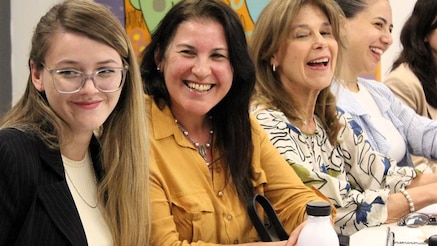
Our corporate social responsibility programs
We support programs that have a long-term impact and create a sustainable future platform in target communities while being aligned with the UN SDGs.
Philippines
In the Philippines, our two-year program aims to support the Department of Education in strengthening the alternative learning for out-of-school adolescents and youth. The program will directly benefit around 4,500 Filipino adolescents and young people (16–24 years). It aims to improve the learners’ opportunities to get employment or enter training by creating a new competence-based assessment and micro-certification to demonstrate the learners’ skills and knowledge, and by improving and enhancing teaching and learning through ICT. This includes making online learning material available offline, providing communication devices and teacher training, and developing monitoring and evaluation mechanisms and tools.
Additional collaboration
Nokia's work with UNWomen developed first as a pilot in the Middle East and Africa region in 2022 scaled up globally in 2023/24. This partnership was designed to impact at least 500 direct beneficiaries in 2024 and continued in 2025. Nokia leverages its people, expertise, and partners to manage local projects with UNW which contributes its gender equality and women’s empowerment expertise. The partnership’s focus is to (a) strengthen the capabilities of women to enhance their employability, entrepreneurship and agency in the online sphere; and (b) foster women’s participation and leadership in the tech sector.
Selected regional and community programs
India
Our corporate social responsibility initiatives in India are developed and implemented through meaningful partnerships with key stakeholders including national, state and local governments, NGOs and, most significantly, communities across nine states, by engaging with them and prioritizing their needs.
Our flagship initiative, Smartpur, was developed to revolutionize access to livelihood opportunities, healthcare, financial inclusion, education and governance for rural communities by utilizing the transformative power of technology.
Smartpur is a digital village ecosystem project aimed at integrating technology into the daily lives of people living in remote villages. Using digital connectivity technology, the project intends to empower local entrepreneurs and provide them with facilities to make services accessible at the village level through Smartpur centers.
Since the project’s inception, 365 Smartpur Centers have been established in partnership with Bal Raksha Bharat and the Digital Empowerment Foundation. In 2023-24, Smartpur created significant impact by reaching over 2,077,700 individuals across rural India.
Additionally, in our effort to support the productive employment, capacity development and skilling of India’s youth, we have partnered with the Telecom Sector Skill Council (TSSC) to establish a center of excellence that offers certified training in futuristic and in-demand job roles in 5G and IoT. This builds awareness and boosts the availability of skilled manpower for the telecommunications industry.
Read more about our CSR activities in India in our latest India CSR report.

China
In China our employees have launched volunteering/charity programs across the country. The programs have focused on, for example, coaching girl students in ICT to improve future job prospects, a kids tech summer camp with Nokia experts, and regular online courses for children in remote mountain regions. Nokia's Ninglang Partnership Program has included developing smart classrooms, student scholarships and teacher skills as part of the Partner-Up sponsorship program to support the education of children from poorer backgrounds.

Community based programs and volunteering
Our volunteering guidelines and supplemental Standard Operating Procedures provide guidance to our employees on charitable sponsorships and donations as well as volunteering activities. All employees are permitted two days per year from their paid working time to engage in volunteer work.
A snapshot of previous key social programs
Senegal
Nokia and UNICEF Finland announced a new program in 2023 that aims to help bridge the digital divide and provide a dedicated digital education in select parts of Senegal. The work also includes upgrading equipment and connectivity in the target schools, and the expected beneficiaries are both teachers and middle school children in underserved areas.
Morocco
In March 2024, Nokia and UNICEF finalized their 2.5-year program in Morocco. The objective of this social innovation and entrepreneurship program was to empower less advantaged young people (15–24 years), particularly girls, to become resilient and increasingly productive through self-employment and active engagement with their own communities. During the year, Nokia also closed its pilot program with UNICEF in Senegal. This program began in 2023 aiming to introduce digital education for students and teachers in public schools in selected parts of the country. Through hands-on coding activities, students were able to develop essential skills in digital literacy, coding and problem-solving. The trained educators can serve as digital champions, integrating digital skills and coding into their teaching, supporting colleagues and fostering a school-wide digital learning culture.
Nokia supporting Ukraine
In 2022 Nokia donated EUR 1 million to UNICEF to help support its humanitarian work in Ukraine, which is focused on the critical needs of children and families. In addition, we have worked with UNICEF to provide a platform for employee fundraising. Thanks to the generosity of Nokia colleagues, we were able to donate a further EUR 33,000 of Nokia employee donated funds to Ukraine through an employee fundraising campaign website. Nokia has also committed to providing 5,000 Beacons to Ukraine to provide Internet access to shelters in schools.
Local community engagement
Our employees across our sites are active in organizing activities to support and engage with the communities around them. They carry out acts of support throughout the year through humanitarian and crisis aid projects, such as donating medical material and used IT equipment, collecting and donating toys, clothes and other essential goods.
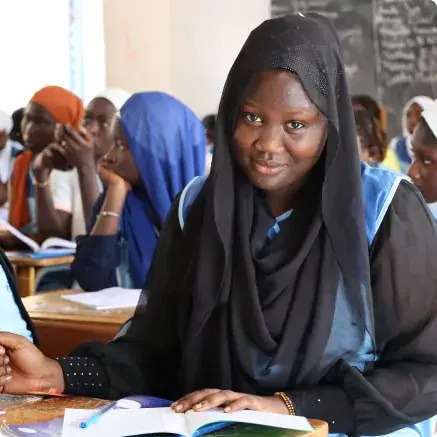
Ndiarka Diagne school in Guédiawaye
©Massamba Fall
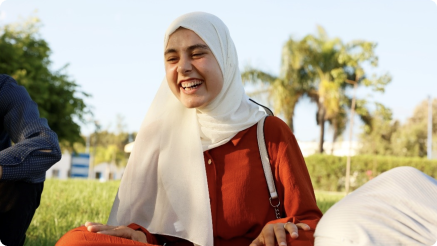
©UNICEFMAROC
Acting together to improve opportunities in technology for underrepresented communities
Nokia launched a scholarship support program aimed at providing greater opportunities for underrepresented communities in the technology industry. Working together with digital talent transformation platform Udacity and the Blacks in Technology Foundation (BiT Foundation), the initiative offers more than 300 tech scholarships, with a focus on underrepresented students and career changers.
During the application period of August – September 2021 we received nearly 26,000 applications. After pre-selection, we invited prospective candidates to take part in a 2-month challenge course which acted as an introductory program. Based on the motivation and learning shown during the challenge course, we finally made the selection of 302 scholarship winners who started their Nanodegrees in January 2022 and completed in June 2022.
26 000
We received nearly 26 000 applications
302
Nanodegree scholarships awarded
Connecting the unconnected to inclusive digital learning in Kenya
Between 2018-2020 we worked with UNICEF Finland and UNICEF Kenya to build a multi-partner collaboration to bring internet connectivity and inclusive digital learning to Kenyan schools in rural and disadvantaged urban areas across the country. The program particularly focuses on girls and children with disabilities.
The first 10 schools across Kenya were successfully connected in late 2020 using Nokia Fixed Wireless Access solution in collaboration with local Mobile Operators. The solution connects more children in a fast and efficient way with high-speed and high-capacity broadband needed for remote digital education.
Moving from a CSR pilot to commercial rollout, we have together with UNICEF and Safaricom connected 90 primary schools to the Internet across Kenya during 2021.
Read more about the scaling up of Kenyan school connectivity here.
Read more about student stories and earlier achievements of the program.
Watch the video with highlights from the program journey.
Key achievements 2018-2021
- 10 - First schools connected and used by all 1363 students to access digital learning. Read more.
- +42 000 - girls reached directly through the program
- 450 - children with disabilities benefited from the program
- +86 000 - children in total reached directly through the program
- 500 - Teachers trained in the use of digital materials, out of which 290 are female
- +32000 - more students connected to the internet as we connected a further 90 schools together with Safaricom and UNICEF in 2021